How Long Does Part-Time Pilot Training Take in 2026?
Published by: Jordan Morris
Two people start flight training in the same week. Both have full-time jobs, both are aiming for a private pilot certificate, and both expect to need about the same number of flight hours. One flies three times a week. The other flies once a week, on Saturdays. A few months later, one of them is getting ready for a checkride and the other is still working on landings.
If you’re looking at part time pilot training, this is the question that decides your calendar. The short answer: how often you fly sets your timeline more than anything else you control. At Speedway Flight Training, we plan our Private Pilot program around 50 hours of flight training, and we recommend flying at least three times a week. Below, you’ll see what that 50 hours looks like at one, two, or three lessons a week, and why long gaps between lessons tend to add hours on top of the calendar time.
Start With 50 Hours, Then Let Your Pace Set the Calendar
The FAA sets a minimum of 40 hours of flight time for a private pilot certificate under Part 61. That’s a floor. Most students need more than the minimum, which is why we build our program estimate around 50 flight hours plus 18.5 hours of ground lessons. Part 61 is the set of FAA rules that lets an instructor train you on a flexible schedule instead of a fixed course calendar.
Fifty hours is a planning number. The hours you actually log come from how quickly your skills stick, how prepared you show up, and how many lessons you lose to weather or work, and your pace affects every one of those. You can read the full list of private pilot experience requirements on the FAA’s page on hourly requirements for becoming a pilot.
Our complete private pilot license guide walks through each training stage. This post stays on one thing: turning hours into weeks.
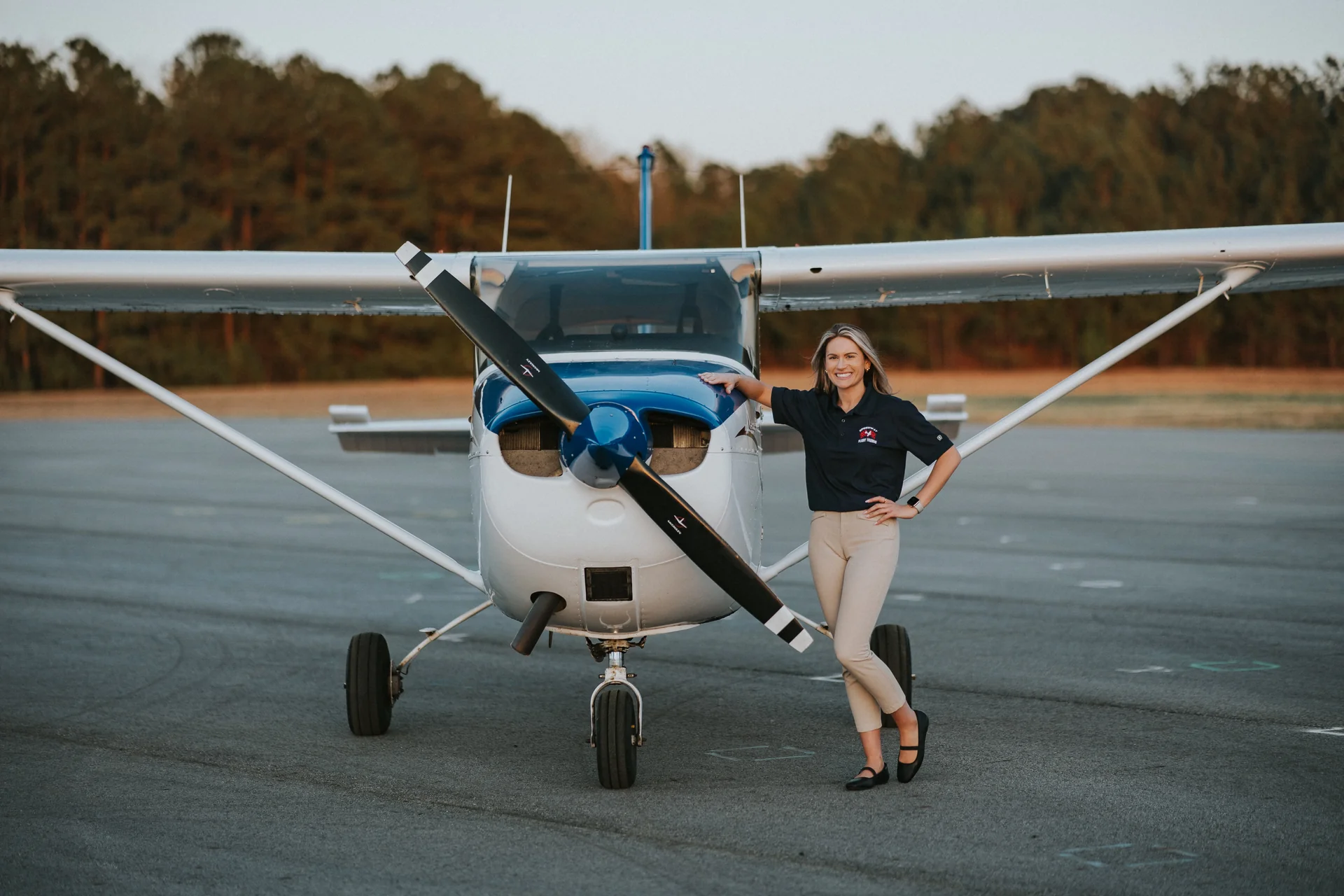
Your total hours come from how often you fly as much as from the airplane.
Run the Numbers at One, Two, or Three Lessons a Week
Here’s some simple calendar math. It rests on three planning assumptions we’re stating up front: each lesson logs about 1.5 hours of flight time, you need 50 hours, and in the last column, roughly one scheduled lesson in four gets cancelled for weather, work, or an aircraft that needs attention. Change any of those and the weeks change too.
| Lessons a week | Lessons to reach 50 hours | Weeks if every lesson flies | Weeks if 1 in 4 is cancelled |
|---|---|---|---|
| 3 | about 34 | about 11 to 12 | about 15 |
| 2 | about 34 | about 17 | about 23 |
| 1 | about 34 | about 34 | about 45 |
Read this table as illustrative arithmetic. Your real calendar depends on how you learn, how much you study between flights, the weather, instructor and aircraft availability, and scheduling your checkride.
The table keeps the hours fixed at 50 for every row. In practice, the once-a-week student usually needs more hours than the three-a-week student, because part of every lesson goes to getting back to where the last one ended. So the slow row is optimistic twice over: more weeks, and probably more hours inside those weeks.
The table also stops at the last flight lesson. You’ll still need time for the knowledge test, final checkride prep, and getting on an examiner’s schedule. Leave room for those at the end of your plan.
Why Long Gaps Between Lessons Cost You Hours
Flying is a physical skill. The sight picture for a good landing and the rhythm of a radio call both fade when you go a week or more without practice. When you fly two or three times a week, you show up to each lesson still carrying the last one.
Spacing also changes what happens on the ground. Each lesson in our program includes pre- and post-flight ground time with your instructor: a briefing before you fly and a debrief after. When lessons are close together, the briefing builds on yesterday. When they’re two weeks apart, the first part of it turns into a recap, and the first twenty minutes in the air often go to re-finding your landing picture instead of learning something new.
That review time is still paid time, and it doesn’t move you forward. It’s the main reason flexible private pilot training works best when “flexible” means picking your days while still flying often. Sam B., one of our students, put it this way in a review: “They don’t waste your time by stretching out lessons or adding unnecessary hours.”
If you’ve had a long break before, our post on staying proficient in the off-season has ideas for keeping skills warm between flights.
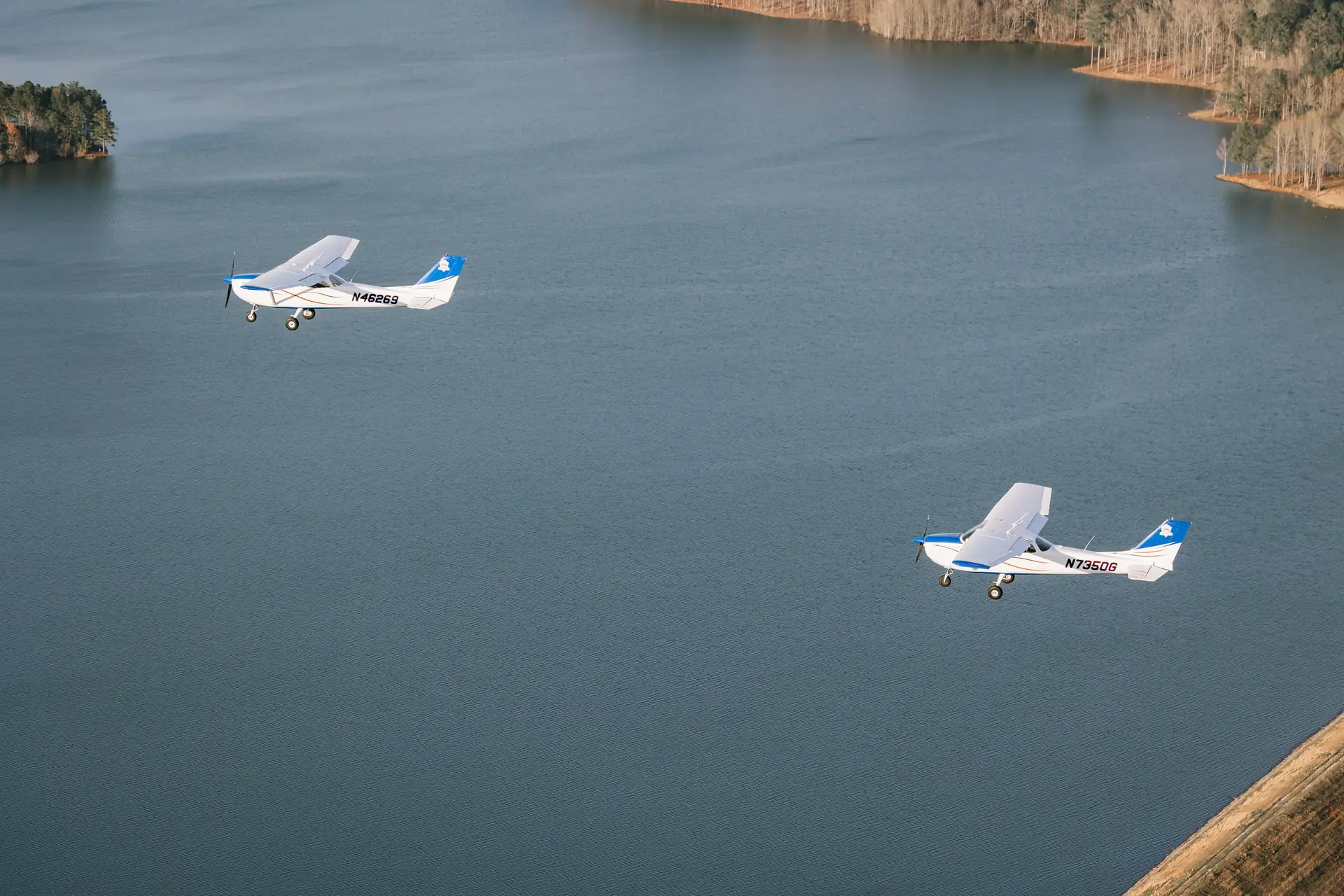
Frequent lessons keep each flight building on the last one.
Plan a Buffer for Weather and Work
Some lessons won’t happen. Georgia weather, a late meeting, a sick kid, or an airplane that needs maintenance will knock out a slot now and then. That’s why the table above has a cancellation column. A plan that only works when every lesson flies will slip.
The best protection is a backup slot in your week, so a cancelled lesson moves instead of disappearing. Our flight training day runs from 6:00 AM to 11:30 PM every day, and our post on evening flight lessons and a weekly plan for working adults shows how to build a week with a make-up slot already in it.
Pace protects you here too. If you fly three times a week and lose one lesson, you still flew twice. If you fly once a week and lose one, you’ve gone two weeks without flying, and the next lesson starts with review.
Four FAA Time Windows That Reward a Steady Pace
A few FAA rules come with their own clocks. None of them are a problem at a steady pace, but a very slow plan can bump into them.
- Your medical before solo. You don’t need an FAA medical certificate to start lessons, but you need one before you fly solo. Book the exam early so it isn’t the thing holding up your first solo. Our FAA medical process guide explains the steps.
- Solo endorsements and the 90-day window. Before you fly solo, your instructor endorses your logbook based on training given within the previous 90 days, and those endorsements have to be renewed every 90 days after that. A long break can mean flying with your instructor again before you solo.
- The knowledge test result. Your written test has to be passed within the 24 calendar months before the month you finish your checkride. At a steady pace, that’s plenty of room. A plan that stalls for a year can put it at risk.
- Checkride prep. The FAA requires 3 hours of flight training to prepare for the practical test within the 2 calendar months before it. That final stretch works best when you’re flying often.
The checkride is the practical test with an FAA examiner. Our post on what checkride day looks like covers it in detail.
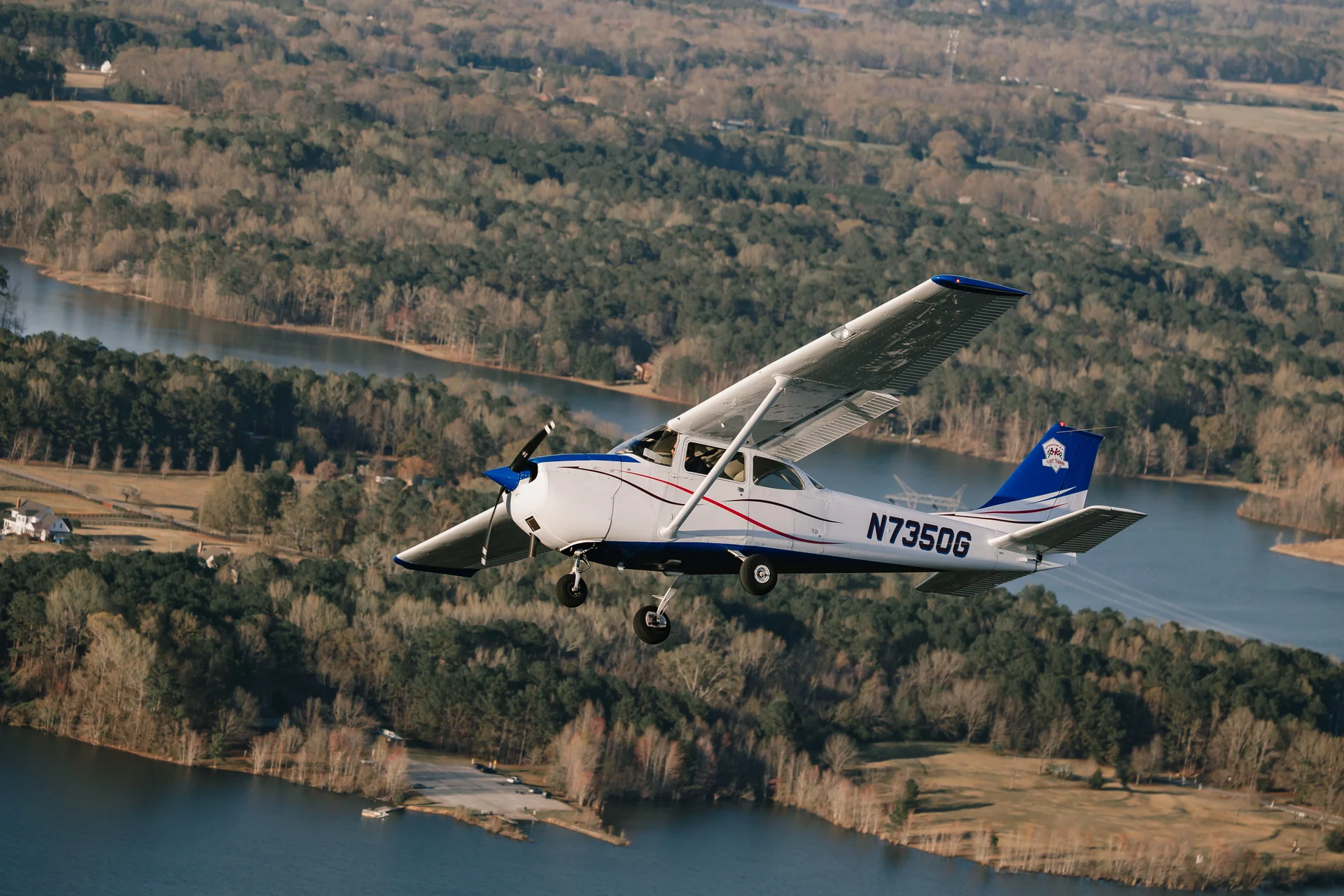
A steady pace keeps you well inside the FAA time windows.
Choose a Pace You Can Actually Keep
Pick a pace you can hold for months. Here’s how we’d weigh the three options for a working adult:
- Three lessons a week is what we recommend. It keeps skills fresh, keeps briefings moving forward, and absorbs a cancelled lesson without a long gap.
- Two lessons a week is a workable middle ground when three isn’t realistic. Add a backup slot so a lost lesson doesn’t turn into a long gap.
- One lesson a week gets you in the air, but expect more review in each lesson and a much longer calendar. If that’s all your schedule allows right now, our program has a self-paced option, and you can step up when work calms down.
Some students start at two a week and move to three once they’ve built a routine. Others fly three a week in a slower season at work and ease back during busy months. Yaz E. earned a private pilot certificate with us at 51, writing that it happened “even with a busy work schedule and family.” If age is part of your hesitation, our post on whether you’re too old to become a pilot covers that question. If you’re leaning toward a much faster pace instead, our accelerated training readiness checklist can help you decide.
Pace also shapes cost, since review hours are billed hours. We’ll cover the full cost of part-time training in a separate post. For now, know that we work with Stratus Financial and Flight Training Finance, and our financing options can help qualified students keep a steady rhythm instead of pausing between paychecks.
Frequently Asked Questions
How long does it take to get a private pilot license part time?
It comes down mostly to how often you fly. Using our planning assumptions of about 1.5 hours per lesson and 50 total hours, the math works out to about 11 to 12 weeks at three lessons a week and about 34 weeks at one lesson a week, before any cancellations. Your own timeline will differ, so use those numbers as a starting point for your plan.
Is once a week enough to learn to fly?
You can make progress at once a week, but expect more review at the start of each lesson and more total hours. We recommend at least three lessons a week, and two with a backup slot is a reasonable compromise.
Why does Speedway plan around 50 hours when the FAA minimum is 40?
Forty hours is the FAA minimum, and most students need more. We build our Private Pilot program estimate around 50 flight hours so your plan reflects a realistic number instead of the floor.
What happens if I take a few weeks off?
Your first lesson back will usually be a review flight. If you’ve already soloed, your instructor may need to fly with you before your next solo, since solo endorsements are tied to training within the previous 90 days.
Do weather cancellations really change my timeline?
Yes. Every student loses some lessons to weather, and the fewer lessons you schedule, the more each loss hurts. A backup slot in your week is the simplest fix. Contact us and we’ll help you build one into your schedule.
When should I take the knowledge test?
Most students study during flight training and take the written test before the checkride. Your result has to fall within 24 calendar months of the month you finish your checkride, so a steady pace keeps it comfortably valid.
Map Your Own Timeline on a Discovery Flight
The fastest way to turn this math into a real plan is to come fly with us. Book a discovery flight at Atlanta Speedway Airport (KHMP), tell us how many days a week you can realistically train, and we’ll sketch a pace that fits your job and your budget. Book your discovery flight and start building a part-time timeline you can actually keep.