Private Pilot Requirements for Working Adults: 2026 Checklist
Published by: Jordan Morris
Most working adults picture the hard part of learning to fly as the flying. In practice, the first thing that slows people down is usually paperwork that runs on someone else’s clock. You can be landing well and ready to solo while your medical exam is still weeks away on the calendar or your student pilot certificate is still in the mail.
The good news is that the private pilot requirements for working adults are the same as for anyone else, and most of them can be started on a lunch break. This checklist walks you through what to line up before your first lesson at Speedway Flight Training, in the order we recommend, so your first weeks of private pilot training for working adults go to time in the airplane instead of waiting on forms.
Step 1: Fly Once Before You Buy Anything
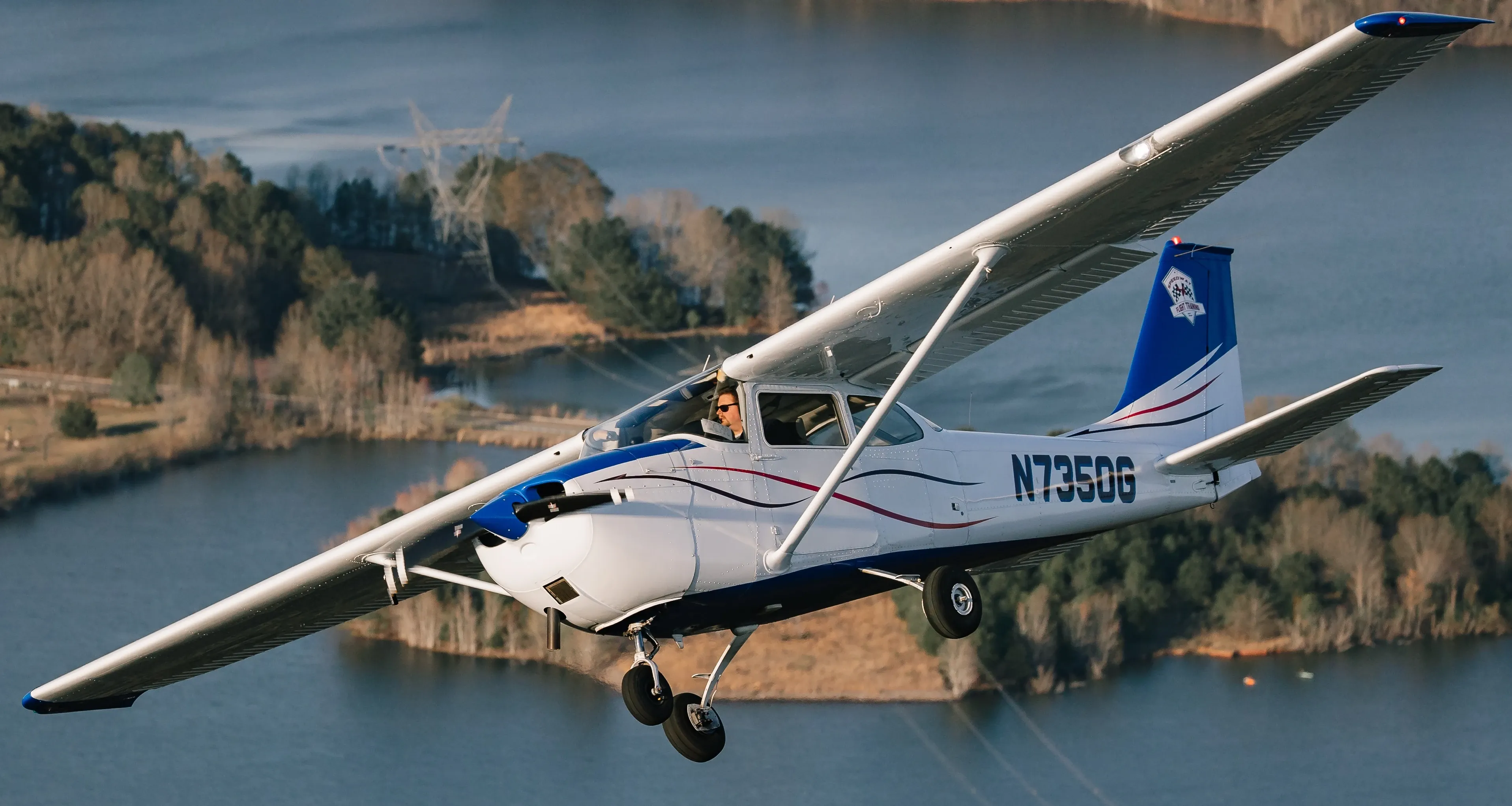
Before you order a headset or open a single FAA form, book a discovery flight. It’s the first item on our enrollment checklist. You’ll fly with a certified instructor out of Atlanta Speedway Airport (KHMP), see Atlanta Motor Speedway and Lake Horton from the air, and find out whether this is something you want to fit into your week.
A discovery flight is also your best planning meeting. Bring your work schedule and your questions. We’ll talk through how often you can realistically fly, what the next few months look like, and which items on this checklist to start first. Our post on what to expect on a discovery flight at Atlanta Speedway Airport covers the flight itself.

A discovery flight is the first step on the checklist and the easiest way to plan the rest.
Step 2: Start Your FAA Medical in the First Week
You don’t need a medical certificate to start lessons, which surprises a lot of new students. You do need one before you fly solo. Because the exam is scheduled around a doctor’s calendar and not yours, it’s the item most likely to hold you back if you leave it late.
For private pilot training, a third-class medical covers both student and private flying. You’ll fill out the FAA’s online application, called MedXPress, and then see an Aviation Medical Examiner (AME), a doctor the FAA has authorized to issue pilot medicals. You can read the FAA’s overview on its medical certification page.
How long it lasts depends on your age on exam day. If you’re under 40, a third-class medical lasts 60 calendar months. At 40 or older, it lasts 24 calendar months. For most working adults, that covers the whole private pilot program with room to spare.
If a flying career is on the table, consider a first-class exam from the start. It tells you early whether you can hold the medical a career requires, and a first-class medical also covers your student and private flying. If you plan to finance your training through Stratus Financial, the application asks for a 1st or 2nd class medical certificate, so book that exam before you apply.
If you have a health condition or take medication, talk to an AME before you book. They’re the right person to answer eligibility questions. Our FAA medical process guide explains the exam itself step by step.
Step 3: Get Your Student Pilot Certificate Moving Early
Your student pilot certificate works the same way as the medical: you can take lessons without it, but you need it before you solo. To be eligible, you must be at least 16 years old and able to read, speak, write, and understand English.
You apply through the FAA’s online system, called IACRA, and a certificated flight instructor, examiner, or FAA office processes the application. Your instructor can help you through it. The FAA says the plastic card usually arrives by mail in about three weeks, so start it soon after you begin training. You can see the details on the FAA’s student pilot certificate page.
The certificate doesn’t expire; it stays valid until you earn your private pilot certificate. Your instructor signs your solo endorsements in your logbook, not on the card, and you must carry both your student pilot certificate and your medical on every solo flight.
When the medical and the student certificate are both in your hands by the time your landings are ready, your solo date depends on your flying and nothing else. Our Private Pilot program walks you from first lesson to that solo and on to the checkride.
Step 4: Gather the Gear We Ask Every Student to Bring
Before your first lesson, we ask every student to have a logbook, a headset, the Gleim student kit, an iPad, and sunglasses. Here’s what each one does and roughly what to plan for.
| Item | Why you need it | What to plan for |
|---|---|---|
| Pilot logbook | Records every lesson, plus the endorsements your instructor signs | A standard paper logbook |
| Aviation headset | Blocks engine noise and lets you hear your instructor and the radio | About $600 to $1,200 for noise-canceling models from Lightspeed, Bose, or David Clark |
| Gleim student kit | Your ground study and knowledge test prep | The Gleim Deluxe Private Pilot Kit is included with our Private Pilot program |
| iPad (6th generation or newer, cellular capable) | Runs your flight planning and navigation apps | About $500 to $700; the cellular models carry the GPS chip, and you don’t need a data plan |
| Sunglasses | Cut glare in the cockpit and protect your eyes on long flights | Any good pair you’re comfortable wearing with a headset |
These figures are approximate and can change, so give us a call at (678) 944-7379 and we’ll confirm current numbers. You can browse Lightspeed headsets in our pilot store. The program also includes foggles and a fuel tester, so you don’t need to buy those.
If your schedule is tight, set up your iPad before lesson one. Charge it, install your flight planning app, and get familiar with the screens at home, so you aren’t learning menus on the ramp with the clock running.
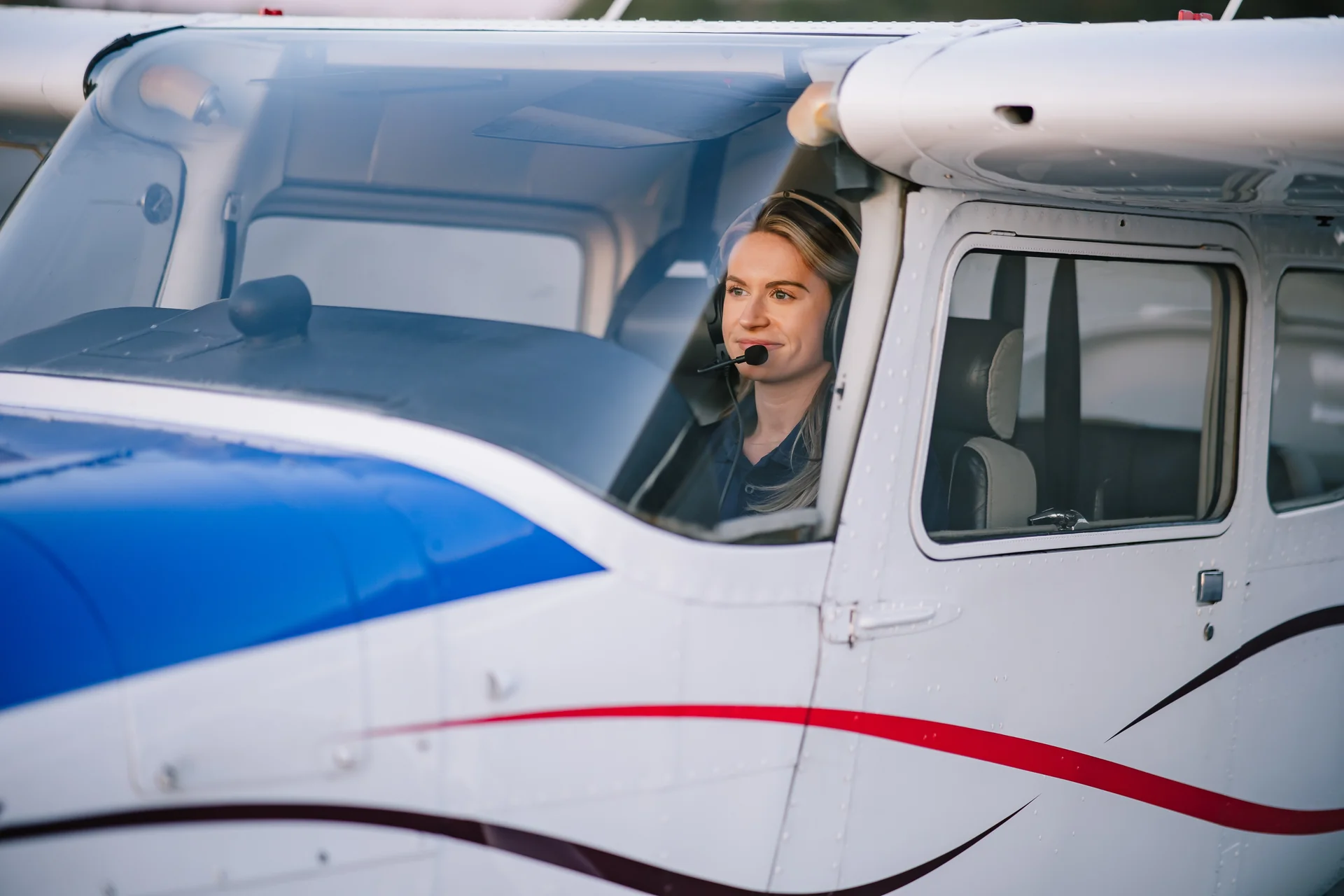
A good headset is one of the first things you'll use and one of the last things you'll want to replace.
Step 5: Plan Knowledge Test Study Around Your Work Week
The FAA knowledge test, often called the written test, is a computer-based exam on regulations, weather, navigation, aircraft systems, and flight planning. Our program includes ground school and exam prep along with the Gleim kit, so you won’t be studying alone.
For working adults, the trick is to make study small and regular. Short sessions on weeknights tend to stick better than one long Saturday cram. One simple pattern:
- Two weeknight sessions of 30 to 45 minutes on the next Gleim topic.
- One short review the night before each lesson, focused on what you’ll fly tomorrow.
- Practice questions on weekends, once you’re a few topics in.
Before you sit for the test, you’ll need an instructor endorsement saying you’re prepared, plus a photo ID with your signature and date of birth. The test fee runs about $175. Once you pass, your result has to fall within the 24 calendar months before the month you finish your checkride, which is plenty of room at a steady pace. Our post on how long part-time pilot training takes shows how that window fits into a full timeline, and our weekly plan for evening flight lessons shows how to protect study time between flights.
Step 6: Line Up Funding and a Pace Before Lesson One
The last item is the easiest to put off: decide how you’ll pay and how often you’ll fly before you start. Running out of money halfway, or flying once every few weeks, turns into review time and extra hours.
We recommend flying at least three times a week, because skills stay fresh and each lesson builds on the last. Flight training at Speedway is available daily from 6:00 AM to 11:30 PM, and our program has a self-paced option for students who need flexibility. Our part-time training budget guide walks through what that pace costs per month.
For funding, we work with Stratus Financial, which pays the school directly as you train. Financing is available to qualified applicants and is subject to a credit check and underwriting. You can start on our financing page. If cost is the main thing keeping you on the ground, look at the Speedway Scholarship Fund, which supports students with financial need.
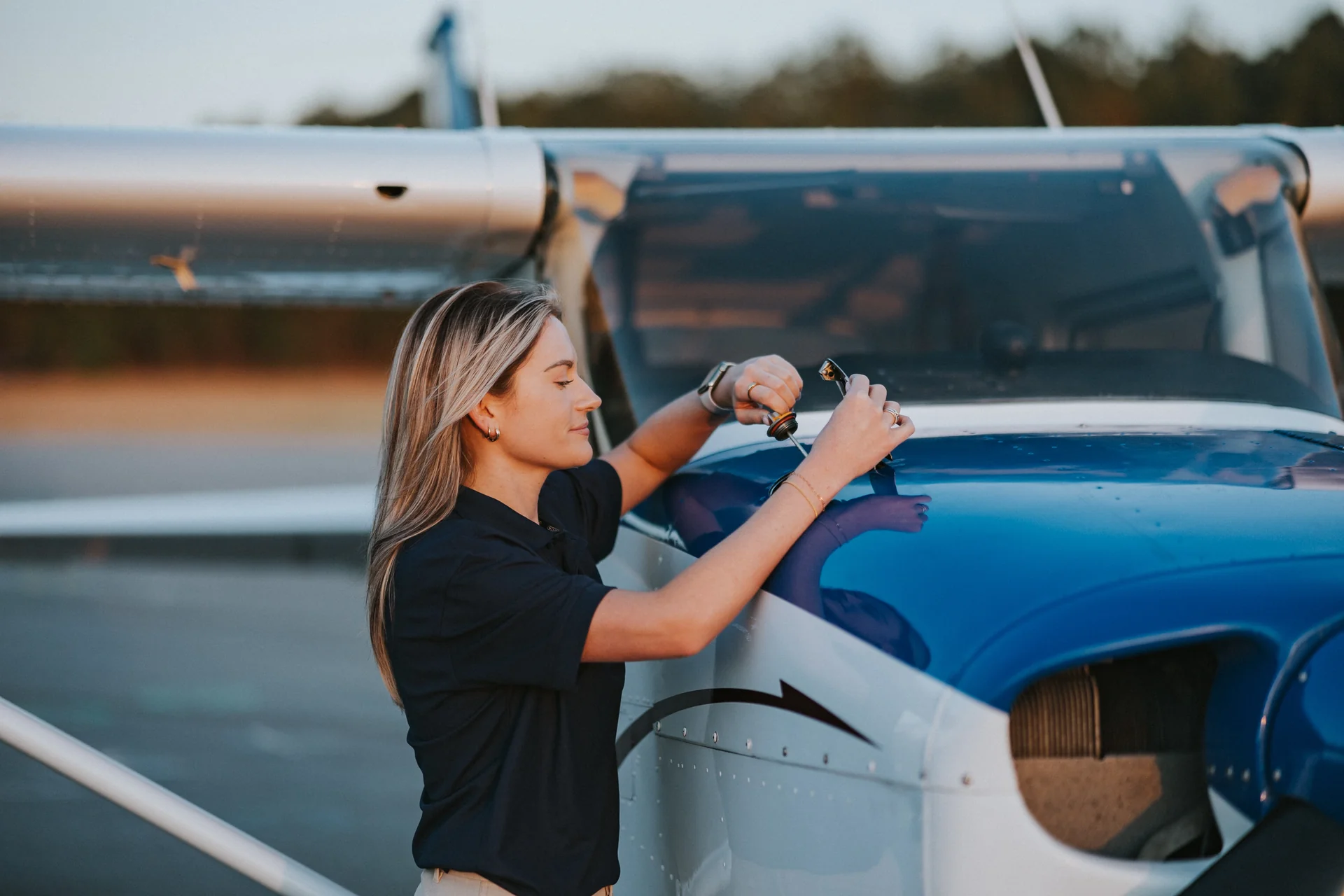
With the checklist done, your first lessons go to preflights and flying instead of paperwork.
Your Pre-Start Checklist at a Glance
Here’s the whole list in the order we suggest, with when to start each item. If you only have one free lunch hour this week, use it on the medical.
| Checklist item | When to start | Why it comes here |
|---|---|---|
| Discovery flight | First | Confirms you want to train and gives you a plan |
| FAA medical (MedXPress + AME exam) | Week one | Needed before solo; depends on an outside calendar |
| Student pilot certificate (IACRA) | Early in training | About three weeks by mail; needed before solo |
| Gear: logbook, headset, Gleim kit, iPad, sunglasses | Before lesson one | You’ll use all of it from the first flight |
| Knowledge test study plan | With your first lessons | Short weekly sessions fit around work |
| Funding and weekly pace | Before lesson one | Keeps your training steady once it starts |
You don’t have to finish every box before your first lesson. The medical and student certificate just need to be done by the time your instructor is ready to send you solo. Starting them early means they never become the reason you wait. Our Private Pilot program is built to move you from here to the checkride.
Plenty of our students train around a full-time job. Elijah L. wrote that he passed his instrument checkride while working full time, and called the school “the real deal.” Flexible private pilot training goes more smoothly when the slow items are already started before your first lesson.
Frequently Asked Questions
Do I need a medical certificate before my first lesson?
No. You can start lessons without one. You’ll need at least a third-class medical before you fly solo, so book the exam early. If you have health questions, talk to an Aviation Medical Examiner first. Our FAA medical process guide explains the steps.
How old do I have to be to get a student pilot certificate?
You must be at least 16 to get a student pilot certificate for airplanes, and you need to read, speak, write, and understand English. There’s no upper age limit on starting. Our post Am I Too Old to Become a Pilot? covers starting later in life.
How long does it take to get a student pilot certificate?
The FAA says the card usually arrives by mail in about three weeks after you apply through IACRA. Your instructor can help you with the application, so start it early in training.
What should I buy before my first flight lesson?
We ask every student to have a logbook, a headset, the Gleim student kit, a cellular-capable iPad (6th generation or newer), and sunglasses. The Gleim Deluxe Private Pilot Kit comes with our Private Pilot program, so you don’t need to buy it separately.
When should I take the FAA knowledge test?
Most students study alongside their flight lessons and take the test once their instructor endorses them as ready. Your result has to fall within the 24 calendar months before the month you finish your checkride, so there’s no need to rush it before you start flying.
Can I really do private pilot training with a full-time job?
Yes. Flight training at Speedway runs daily from 6:00 AM to 11:30 PM, and our program has a self-paced option. We recommend flying at least three times a week. Our weekly plan for working adults shows how to build it.
Make the Discovery Flight Your First Checkbox
Every item on this list gets easier once you’ve flown with us. Book a discovery flight at Atlanta Speedway Airport (KHMP), bring your work schedule, and we’ll help you decide what to start this week and how to fit training around your job. Book your discovery flight and check off step one.