Discovery Flight at Atlanta Speedway Airport: What to Expect
Published by: Sammy Shlapak
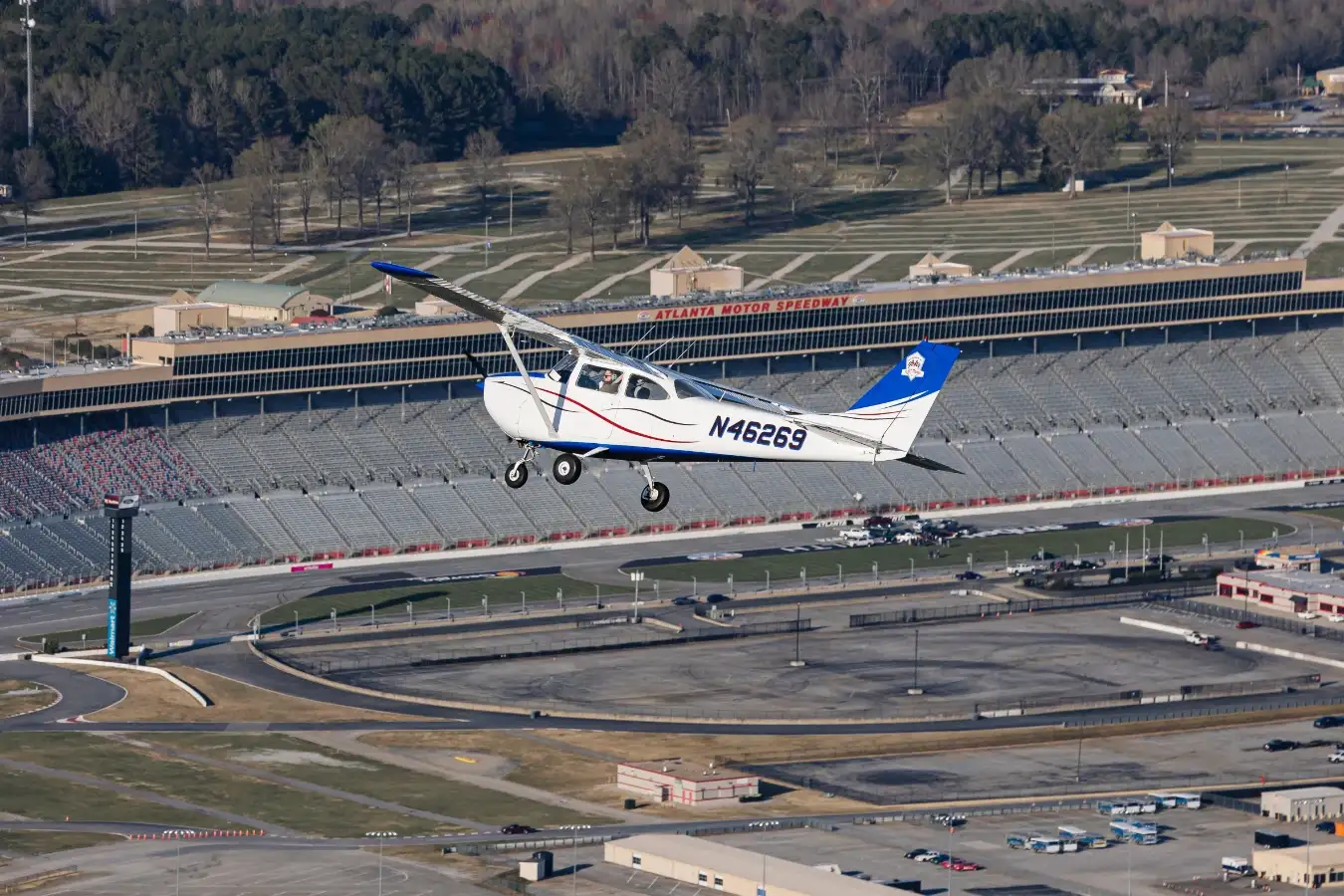
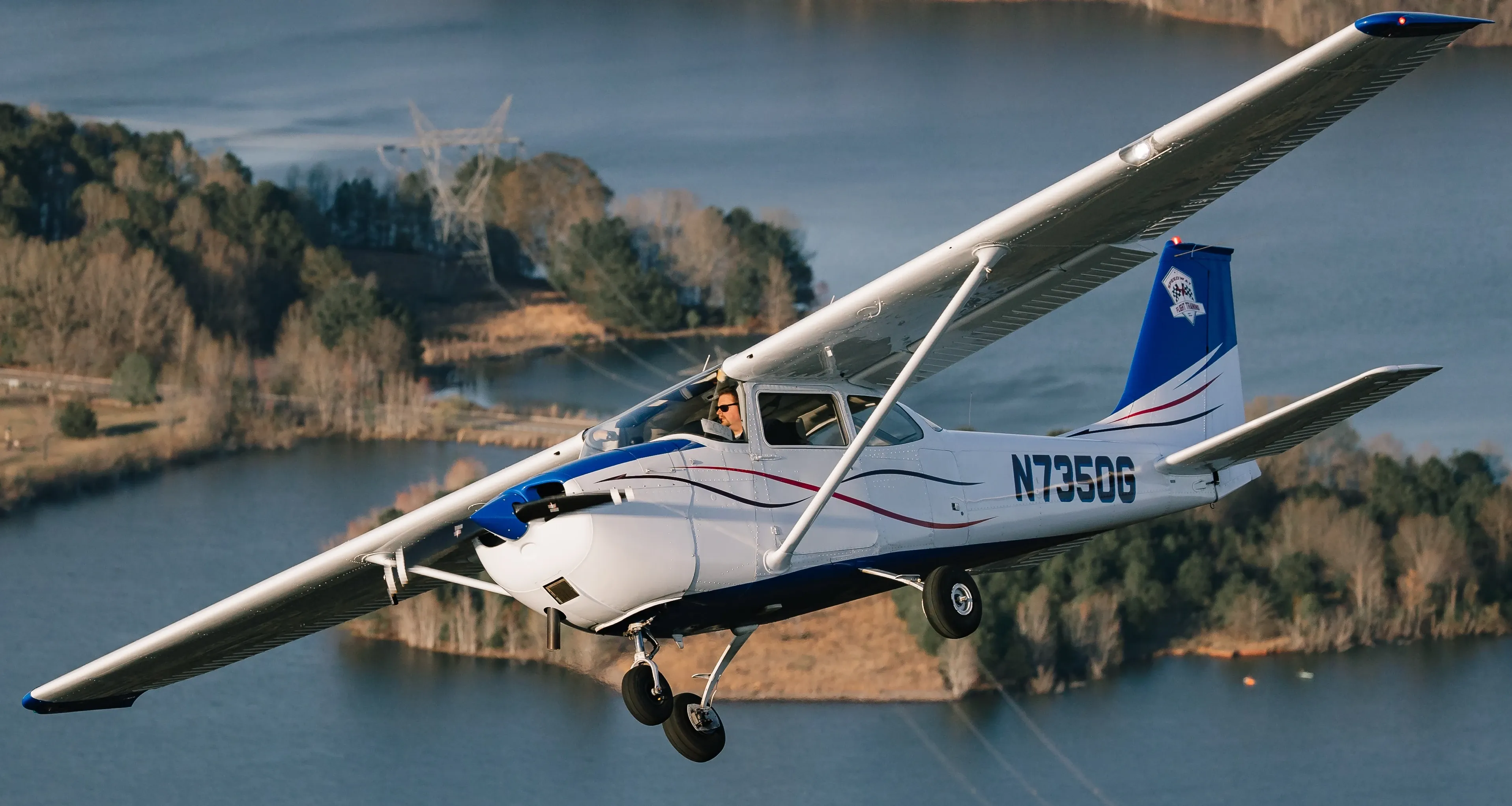
Your first flight is an exciting experience, and knowing what to expect can help you feel prepared instead of overwhelmed. During a Discovery Flight at Atlanta Speedway Airport, you’ll get an instructor-led introduction to the airplane, the airport, and the training rhythm you can expect if you decide to keep going.
A Discovery Flight helps you answer a simple question: Does this feel like something I want to pursue? You do not need prior flying experience, and you do not need every pilot-training detail figured out before you arrive. Curiosity, a willingness to listen, and enough time to enjoy the first real step are more than enough to fully take in the flight.
You Start On The Ramp With A Real Airplane
When you arrive at Atlanta Speedway Airport, the day usually begins with meeting your instructor and getting oriented around the aircraft and the local training environment. You can ask basic questions, talk through what brought you in, and hear what will happen before the airplane moves.
Our home airport, KHMP in Hampton, Georgia, gives first-time flyers a practical introduction to aviation without dropping them straight into a busy airline-terminal environment. It is a non-towered airport, which means pilots use published procedures, traffic awareness, and clear radio calls instead of receiving every instruction from an operating control tower. That setting can make the first lesson easier to absorb while still showing you the discipline real flying requires.
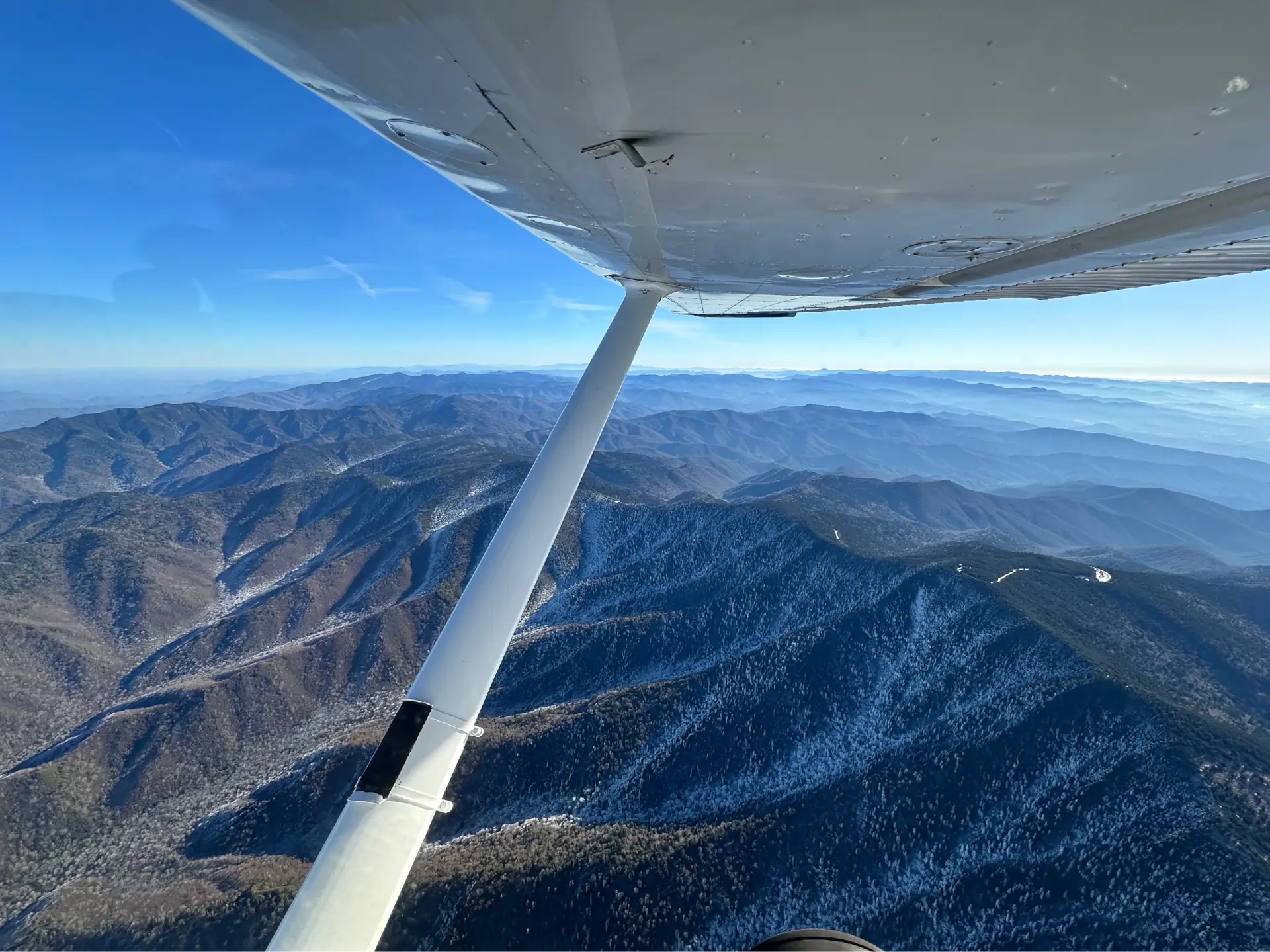
A Discovery Flight gives you a real view from the cockpit before you decide on the next step.
The Preflight Walkaround
Before takeoff, your instructor will introduce you to the aircraft on the ground. The preflight walkaround is one of the first real pilot habits you’ll see: checking the airplane, looking at control surfaces, reviewing fuel and visible condition, and building the mindset that flying starts before the engine starts.
For a first-time student, this part does two useful things. First, it gives you a slower moment to get familiar with the airplane before you climb inside. Second, it shows that aviation is built on repeatable procedures.
You may hear aircraft-specific terms during the walkaround, but you do not need to memorize them at this point. Focus on how an instructor thinks, how a checklist guides the process, and how questions are welcomed. If you continue into Private Pilot training, these ground habits become part of your normal training rhythm.
The Cockpit Becomes Less Intimidating
The cockpit can look crowded the first time you sit down: yoke, rudder pedals, throttle, radios, avionics, circuit breakers, checklists, and instruments all competing for attention. Your instructor’s job is to make that environment understandable one piece at a time.
You will likely talk through the basic flight controls:
| Cockpit item | What it helps you understand on a first flight |
|---|---|
| Yoke | Pitch and bank, or how the airplane points up, down, left, and right |
| Rudder pedals | Yaw control and coordinated flight, especially during turns and climbs |
| Throttle | Power changes and how engine power affects climb, descent, and speed |
| Flight instruments | Airspeed, altitude, attitude, heading, and other basic references |
| Radios and avionics | How pilots communicate and manage navigation or cockpit information |
Our fleet includes Garmin-equipped training aircraft, and your instructor will keep the explanation appropriate for a first lesson, helping you understand what you are looking at and hopefully making the cockpit start to feel organized instead of overwhelming.
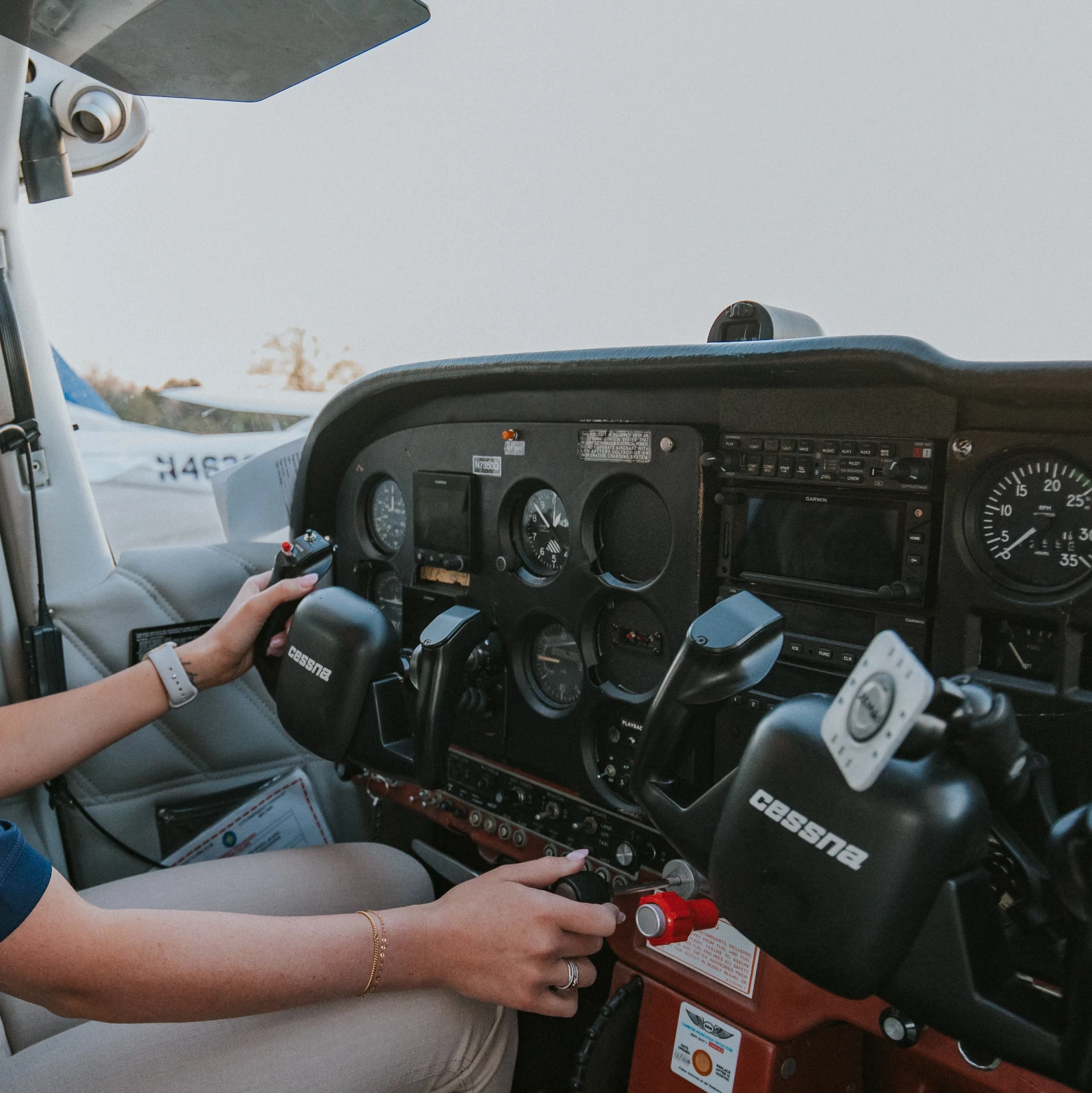
Modern cockpit displays become easier to understand when an instructor connects each instrument to what the airplane is doing.
For students who decide to keep training, that first cockpit orientation becomes a foundation. Later, when you study weather, navigation, pattern work, or instrument skills, you already have a real memory of where those ideas live inside the airplane. Our fleet page can help you see the types of aircraft and avionics used across different training goals.
Taxi And Takeoff
Taxiing an airplane is often the first surprise. Your instructor may point out how pilots steer with rudder pedals instead of a steering wheel, listen for traffic, and move at a pace that leaves room to explain what is happening.
At a non-towered airport, your instructor will also model radio communication and traffic scanning. The airport still has structure: pilots listen, announce intentions, watch for other aircraft, and follow traffic-pattern procedures.
Then comes the moment most people remember: adding power, rolling down the runway, and feeling the airplane become light. Your instructor manages the flight with you, but you may get to feel the controls once the airplane is in a comfortable phase of flight. The first lesson is about feeling how the airplane responds to calm, coordinated inputs.
From Hampton, the view can make the training feel local right away. You may see the roads, fields, water, and familiar Georgia landmarks from a perspective that makes the goal feel more concrete. If the route, weather, and schedule allow, your instructor may point out local references as part of the experience. Our Atlanta-area training environment helps make the first flight feel connected to the place you may train.
You May Get To Handle The Controls, With An Instructor Right There
One of the most memorable parts of a Discovery Flight is realizing that flying is physical and learnable. When your instructor lets you follow along or take the controls, you may practice gentle turns, straight-and-level flight, climbs, or descents depending on conditions and comfort.
This is where a lot of students discover the difference between watching aviation and participating in it. The airplane is responsive in a way you can learn: small inputs, looking outside, and listening. Your instructor will keep the workload manageable so you can feel the connection without being rushed.
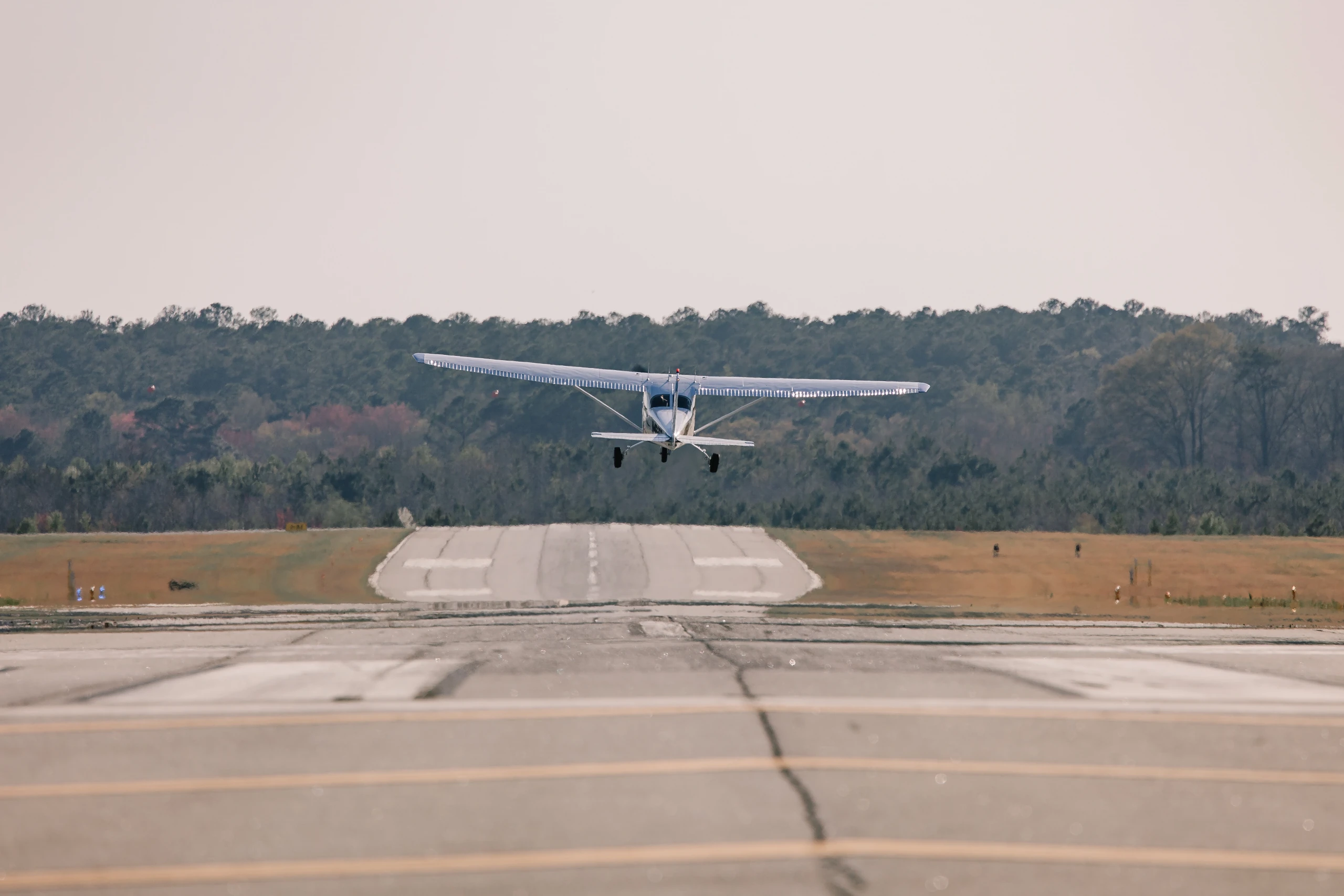
Takeoff is often the moment when the first flight starts to feel real.
If you are thinking about a full Private Pilot License, this moment gives you a real reference point. You are no longer deciding from a brochure or a video. You have felt the airplane, heard the radio, watched the instructor work, and seen how training begins.
The Debrief Turns The Flight Into A Next Step
After landing, the post-flight debrief is where the experience becomes useful. Your instructor can answer what went well, what surprised you, and what the next lesson path could look like if you want to continue.
This is also the right time to talk through practical questions:
- How often should you train if you want steady progress?
- What does the Private Pilot program include?
- When should you start thinking about an FAA medical certificate?
- What outside costs should you plan for as training gets serious?
- What schedule or aircraft availability fits your goals?
If you plan to continue, address medical certification early. You do not need a student pilot certificate or medical certificate just to take an instructor-led introductory lesson, but most airplane students need to sort out medical eligibility before solo flight unless another FAA-recognized qualification applies. For personal medical questions, work with an Aviation Medical Examiner or FAA medical resources rather than relying on guesswork.
Your pace after the Discovery Flight depends on your schedule, preparation, weather, aircraft and instructor availability, and FAA requirements. We can help you map a realistic path instead of turning one exciting first flight into an unrealistic timeline.
How A Discovery Flight Connects To Training At Speedway
A Discovery Flight is a low-pressure way to decide whether a full program feels right. It is a decision-making flight. You get to see the school, meet an instructor, sit in the airplane, and decide whether the next step feels right.
Here is how the experience can connect to common goals:
| If your goal is… | A useful next step |
|---|---|
| Learn to fly for personal travel or recreation | Review our Private Pilot License program and talk through a realistic weekly schedule |
| Build toward a professional aviation path | Compare Private Pilot, Instrument Rating, Commercial Pilot, and CFI training as part of a staged plan |
| Understand the cost before starting | Talk with us about training assumptions, outside expenses, and financing options that may be available through Stratus Financial for qualified applicants |
| Decide whether you belong in aviation | Use the Discovery Flight to test your interest before you commit to a larger program |
The right next step is the one that fits your actual goal. Some students want the joy and utility of a private pilot certificate. Others are looking at a longer career path through instrument, commercial, and instructor training. We offer both, and we can help you understand the difference before you enroll.
FAQ: First Discovery Flight Questions
Do I need flying experience before a Discovery Flight?
No. A Discovery Flight is built for beginners. Your instructor will guide the experience, explain the aircraft, and keep the workload appropriate for a first lesson. You can start by scheduling through our Discovery Flight page.
Do I need a student pilot certificate first?
No. A student pilot certificate is not required just to take lessons with an instructor. It becomes important later in the training path before solo flight. If you continue after the Discovery Flight, we can help you understand when that step belongs in your plan.
Do I need an FAA medical certificate for the first flight?
For the introductory lesson itself, no FAA medical certificate is required. If you are serious about continuing toward solo flight and a Private Pilot certificate, address medical certification early so you do not spend time and money without understanding your path.
Will I fly the airplane myself?
Your instructor will manage the flight and may let you handle the controls during appropriate parts of the lesson. Weather, traffic, comfort level, and instructor judgment all matter. The goal is a safe, useful introduction, not pressure.
What should I bring?
Bring a photo ID, comfortable clothing, closed-toe shoes, and any questions you want answered. Sunglasses can help on bright Georgia days. If you plan to continue training, bring your schedule and budget questions too, because those details shape the next step.
What happens if I want to keep training?
We will help you compare goals, schedule, program options, aircraft fit, medical timing, and budget. A common next step is the Private Pilot program, but career-minded students may also want to understand the longer path through Instrument Rating, Commercial Pilot, and Certified Flight Instructor training.
Schedule The Flight
The clearest way to understand flight training is to sit in the airplane with an instructor and feel how the process starts. A Discovery Flight gives you that first real reference point: the ramp, the checklist, the headset, the takeoff, the controls, and the post-flight conversation.
When you are ready, schedule your Discovery Flight with Speedway Flight Training at Atlanta Speedway Airport. We will help you turn curiosity into a clear next step.