From Private Pilot to CFI: A Practical Training Pathway
Published by: Sammy Shlapak
If your goal is to go from private pilot to CFI, the pathway is a sequence of decisions: how you study, how often you fly, how you handle cost, when you add instrument training, and how seriously you prepare to teach from the right seat.
At Speedway Flight Training, we help students from the greater Atlanta area think through that full path before they are deep into training. Career-track pilots move from Private Pilot to Instrument Rating, Commercial Pilot, and then Certified Flight Instructor. That sequence builds the skill, judgment, and experience needed for later professional flying when you plan it with realistic expectations around time, money, medical certification, checkrides, and hiring.

A practical CFI pathway starts with consistent fundamentals before the next certificate on the list.
The first win is building a foundation you can keep using
Your private pilot training is where the habits start: checklist discipline, radio confidence, weather judgment, pattern work, cross-country planning, and the ability to stay ahead of the airplane. For a career-minded student, this stage deserves careful attention. It is where you learn the cockpit rhythm you will later refine under instrument, commercial, and instructor-level standards.
A private pilot certificate gives you noncommercial flying privileges, subject to the aircraft, ratings, endorsements, operating rules, and medical eligibility that apply to your situation. Its value in the CFI pathway is the base layer it gives you for every more advanced decision you will make.
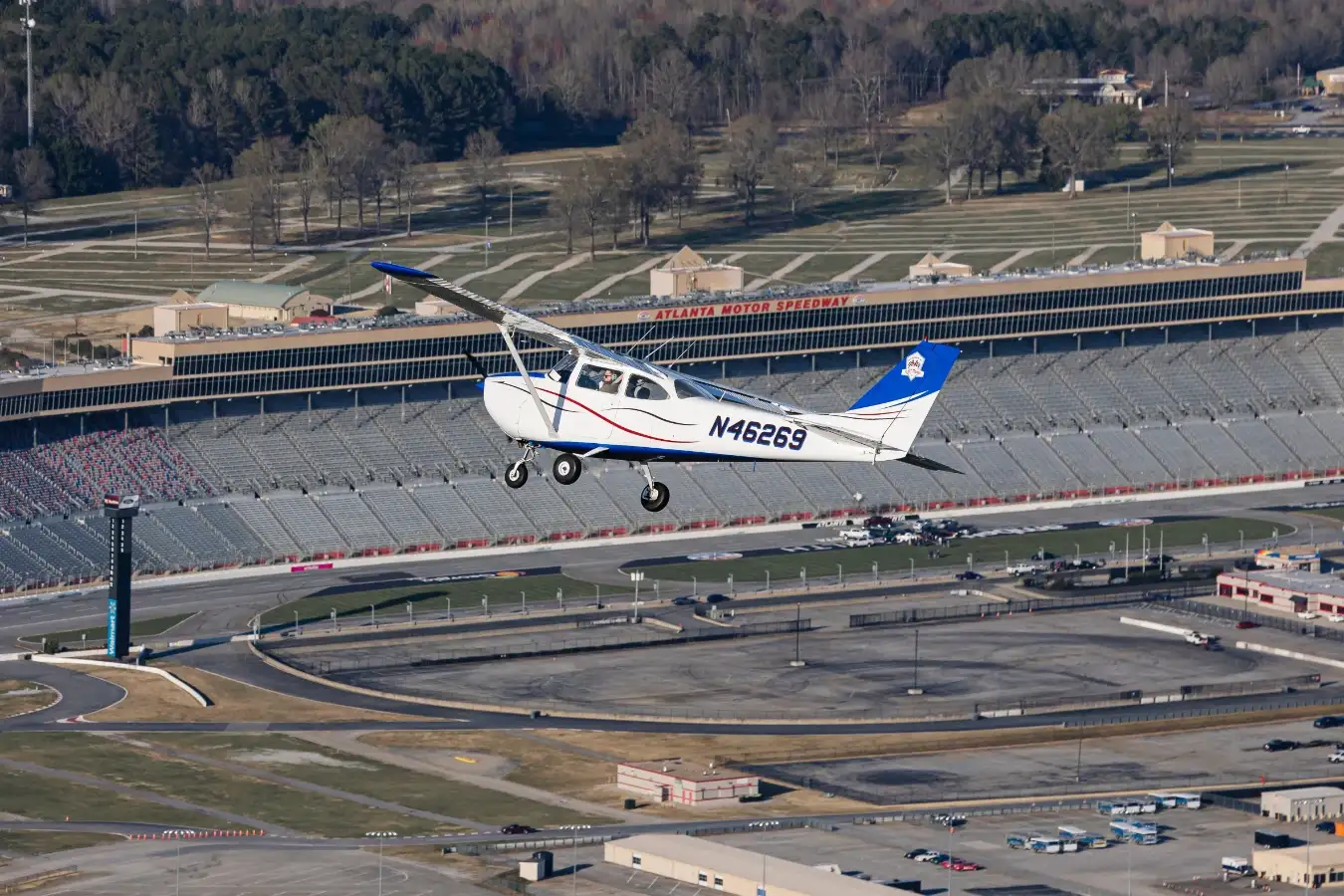
At Speedway, that foundation is shaped by the training environment at Atlanta Speedway Airport. KHMP gives students a practical mix: a non-towered airport pace for efficient lesson flow, with the Atlanta area close enough to make communication and airspace planning feel real. That helps because a future instructor has to do more than fly maneuvers. You eventually have to explain choices while managing the aircraft, the student, and the environment.
The instrument rating turns good habits into cockpit discipline
After private pilot, career-track students add an Instrument Rating. It trains you to fly by reference to instruments, manage procedures, brief approaches, interpret weather, communicate clearly with ATC, and make conservative go/no-go decisions when visibility and ceilings become part of the mission.
For a future CFI, instrument training does something deeper than opening IFR privileges. It teaches precision under workload. You learn to brief before you move, verify before you descend, and stay organized when the airplane, radios, navigation, and weather are all asking for attention.
Our instrument students train in aircraft and avionics environments built for that kind of discipline, and our fleet includes IFR-capable aircraft with modern Garmin equipment. The specific aircraft you use can depend on scheduling, training goals, and availability, so we help you connect the equipment to the rating you are working on.
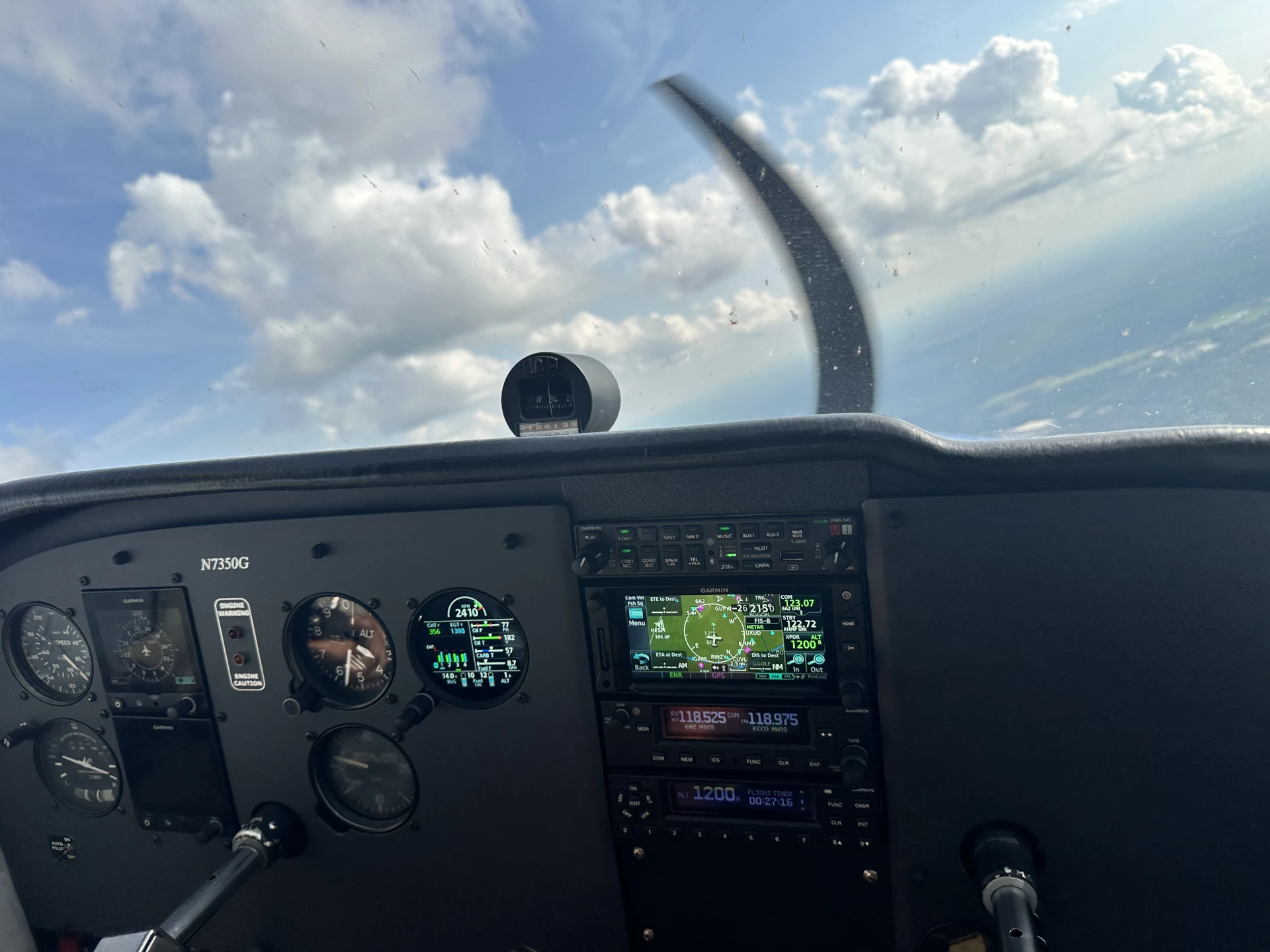
Instrument training builds scan, procedure discipline, and cockpit workload management for the later commercial and CFI stages.
Commercial training is where it becomes professional
The Commercial Pilot step is where flying begins to become professional. A commercial pilot certificate allows certain compensated flying operations, with next-step qualifications shaped by employers, aircraft, insurance, operating rules, and additional ratings.
That is why commercial training should be treated as more than a requirement. It is where you refine precision, polish energy management, improve decision-making, and learn to fly with a professional standard even when nobody is grading the moment.
Commercial students work through advanced maneuvers, scenario-based training, ground preparation, and checkride readiness. This training leads to the question: can you make repeatable, well-briefed, well-controlled decisions when the standard gets higher?
This moment is also a smart time to review the bigger plan. If your goal is CFI, talk with our team about how your commercial timeline, instrument proficiency, study habits, and aircraft scheduling connect to the instructor course. If your goal includes the Fast Track to the Flight Deck, we can help you compare the structured pathway with a more flexible, step-by-step pace.
CFI training asks you to fly, explain, and evaluate at the same time
The Certified Flight Instructor stage changes the way you think. Up to this point, your job was to learn and perform. As a CFI candidate, you have to teach, demonstrate, observe, correct, and keep the flight safe while another pilot is learning.
That shift is why CFI training deserves a lot of attention, you are learning how to transfer judgment. You need lesson plans, Fundamentals of Instruction knowledge, right-seat proficiency, clear communication, and the humility to catch small errors before they become habits in someone else’s flying.
CFI is also a common hour-building pathway for pilots pursuing professional goals. It can help you strengthen stick-and-rudder skills, decision-making, and cockpit communication while teaching future pilots. Instructor opportunities depend on qualifications, school needs, student demand, professionalism, availability, and the hiring standards of the organization.
If you are considering CFI training at Speedway, we can help you look at the whole picture: the certificate you hold now, what training remains, what outside costs to plan for, and whether a structured or flexible path fits your life.
A practical pathway should make cost and schedule visible early
The most aggressive-looking path can be less durable than a pace you can sustain. Flight training pace depends on preparation, lesson frequency, weather, aircraft and instructor availability, checkride scheduling, study consistency, and proficiency. FAA minimum hours are regulatory minimums; many students need additional time to reach proficiency.
Use this table as a planning map, with the final pace shaped by your preparation and availability:
| Stage | What it builds | Training program |
|---|---|---|
| Private Pilot | Core aircraft control, navigation, weather judgment, and solo readiness | Private Pilot |
| Instrument Rating | IFR procedures, scan discipline, ATC communication, and workload management | Instrument Rating |
| Commercial Pilot | Professional-level precision, advanced maneuvers, and commercial privileges | Commercial Pilot |
| Certified Flight Instructor | Teaching skill, right-seat proficiency, lesson planning, and instructor readiness | Certified Flight Instructor |
| Fast Track option | A more structured zero-to-CFI plan for career-focused students | Fast Track to the Flight Deck |
Cost planning should include more than aircraft and instructor time. You may need to budget for ground materials, headset, tablet or subscriptions, written exams, medical exam, renter’s insurance, examiner fees, checkride aircraft time, and extra training if proficiency takes longer than planned. Our financing partnership may be available to qualified applicants through Stratus Financial, and we can help you understand how financing fits into a realistic training pace.
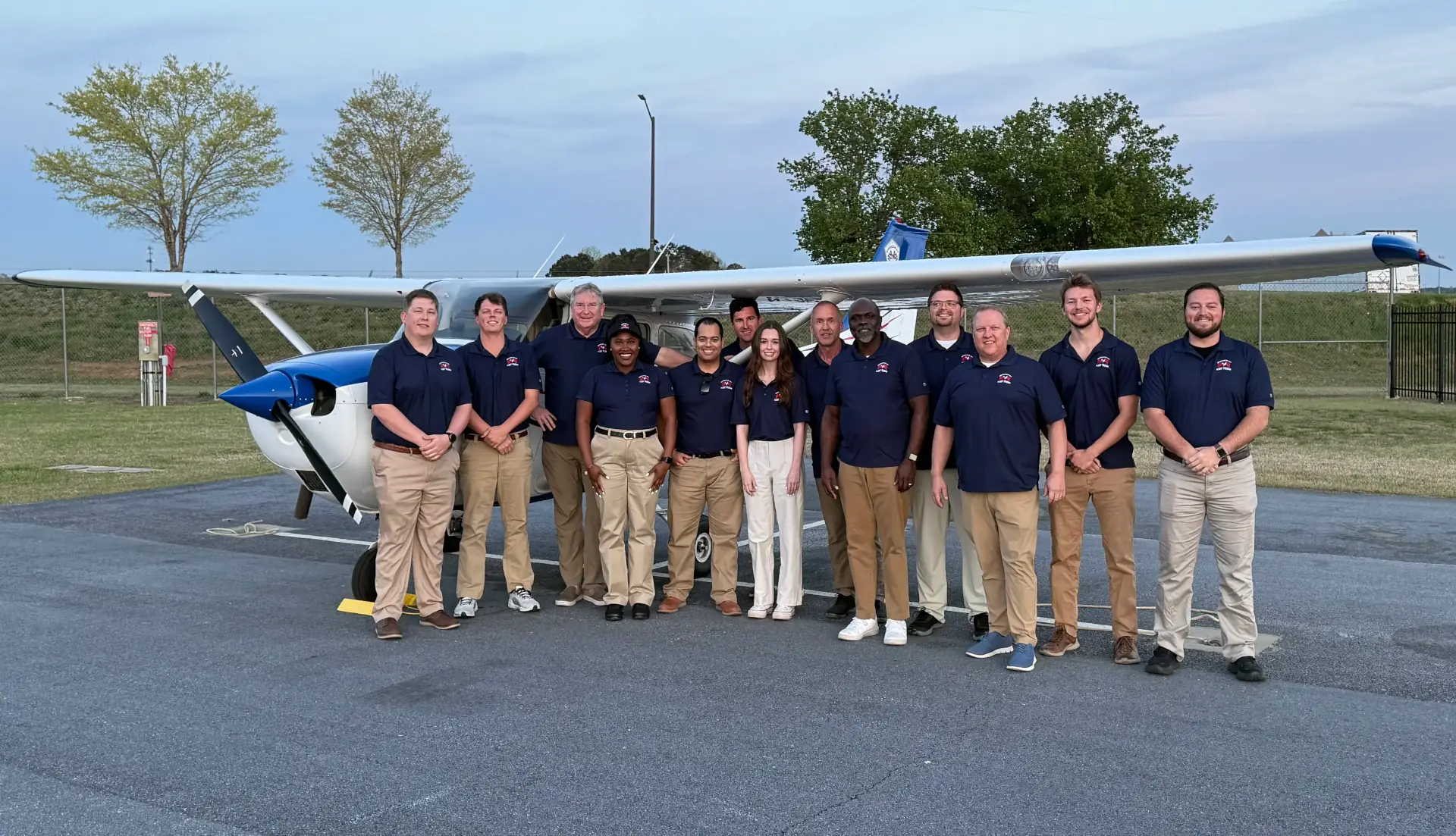
Before you commit to a pace, talk through schedule, budget, aircraft, and checkride planning with a flight school team.
Medical and checkride planning belong at the beginning
If you are pursuing a professional pathway, handle medical certification early. Most airplane students should address medical certification before investing heavily in training because a medical is needed before solo unless another FAA-recognized qualification applies. For eligibility, medication, diagnosis, special issuance, or deferral questions, work with an Aviation Medical Examiner and official FAA medical resources.
Checkrides also deserve early planning. The tests include an oral portion and a flight portion, and your instructor recommends you when you meet the applicable requirements and are ready. Designated Pilot Examiner availability can vary by examiner authorization, location, aircraft, scheduling demand, and FAA oversight.
That is one reason our programs emphasize mock oral exams, pre/post ground, scenario-based training, and checkride preparation across multiple stages. We build a pattern of preparation that follows you from private pilot through CFI.
For career-focused students, the earlier you discuss medical, schedule, checkride timing, and budget, the easier it is to avoid stop-start training. You can begin with a discovery flight, a program conversation, or a direct enrollment consultation depending on where you are in the process.
When the Fast Track path fits and when a slower pace may work better
Our Fast Track to the Flight Deck is built around the zero-to-CFI pathway for students who want a structured, career-focused plan. That can be a strong fit if you have the schedule, study habits, funding plan, and commitment to train consistently.
A slower path can also be the right move. If you are balancing work, family, school, or budget limits, a staged approach may give you better retention and less pressure. The important question is whether the plan is sustainable enough for you to keep showing up prepared.
If you already hold a certificate or rating, your path may call for a focused conversation about the next step: instrument proficiency, commercial requirements, CFI readiness, CFII, multi-engine, or another rating that supports your goals.
FAQ: Private pilot to CFI pathway
How long does it take to go from private pilot to CFI?
It depends on your starting point, training frequency, weather, aircraft and instructor availability, study habits, exam timing, checkride scheduling, and proficiency. Some students fit an accelerated structure; others do better with a steady staged plan. Contact our team through enrollment to map a current pace.
Do I need an instrument rating before becoming a CFI?
Generally, yes. For many career-track students, the instrument rating comes between private pilot and commercial pilot, and it is a major step toward professional-level cockpit discipline. We can help you compare the Instrument Rating timing with your commercial and CFI goals, and answer any other questions you might have.
Can I become a CFI right after commercial pilot training?
Many pilots pursue CFI after earning a commercial pilot certificate. You still need to meet the applicable instructor requirements, prepare for the instructor practical test, and build the teaching skill to explain and evaluate maneuvers. Our CFI program is designed around that transition.
Does CFI training include an instructor job?
No. CFI is a common way to teach and build experience, but employment depends on qualifications, school needs, student demand, professionalism, availability, and hiring standards. We discuss the pathway honestly so you can plan beyond the certificate.
Should I choose Fast Track or train one certificate at a time?
Choose Fast Track if you want a structured zero-to-CFI plan and can support the schedule and preparation it requires. Choose a staged path if your work, family, budget, or learning pace needs more flexibility.
Can I finance the private-to-CFI pathway?
Financing options may be available to qualified applicants through Stratus Financial. Visit our financing page and talk with our team about how financing, schedule, and training pace fit together.
Start with a pathway conversation
The private-to-CFI path can be practical, structured, and exciting when the plan matches your life. Start by telling us where you are now: no experience, private pilot, instrument student, commercial candidate, or ready for CFI.
From there, we can help you compare the next step, current scheduling options, aircraft fit, financing considerations, and the training pace that supports steady progress. When you are ready, start your enrollment conversation with Speedway Flight Training.