Evening Flight Lessons in 2026: A Weekly Plan for Working Adults
Published by: Jordan Morris
It’s 5:00 PM on a Tuesday. You close the laptop, drive down to Hampton, and by 6:00 you’re doing a preflight walkaround on a Cessna 172 while the sun starts sliding toward the trees west of the runway. An hour later you’re back on the ground with a logbook entry and a little more confidence than you had at lunch.
That’s what evening flight lessons can look like when you have a full-time job. The short answer for most working adults: plan on three lessons a week, built from a mix of early mornings, evenings after work, and a weekend slot. At Speedway Flight Training, our training day runs from 6:00 AM to 11:30 PM, every day of the week, so a 9-to-5 still leaves room on both ends. This guide shows you how to build that week, protect it, and use your evening lessons to cover the night flight training the FAA requires for a private pilot certificate.
Why a 9-to-5 Still Leaves You Room to Fly
A standard workday takes eight or nine hours out of the middle. Our flight training day is seventeen and a half hours long, so there is usable time before work, after work, and on weekends. Private pilot training for working adults comes down to fitting lessons into the edges of the day, so you don’t have to take time off.
We recommend flying at least three times a week. Skills like landings, radio calls, and stall recovery fade fast when you go a week or two between flights. At three lessons a week, you spend less of each lesson relearning the last one and more of it moving forward through the Private Pilot program.
Our home field helps here too. Atlanta Speedway Airport (KHMP) has no control tower and not much traffic, so you spend less time waiting to taxi and take off. When your lesson is squeezed between dinner and bedtime, more of that hour goes into actual flying.
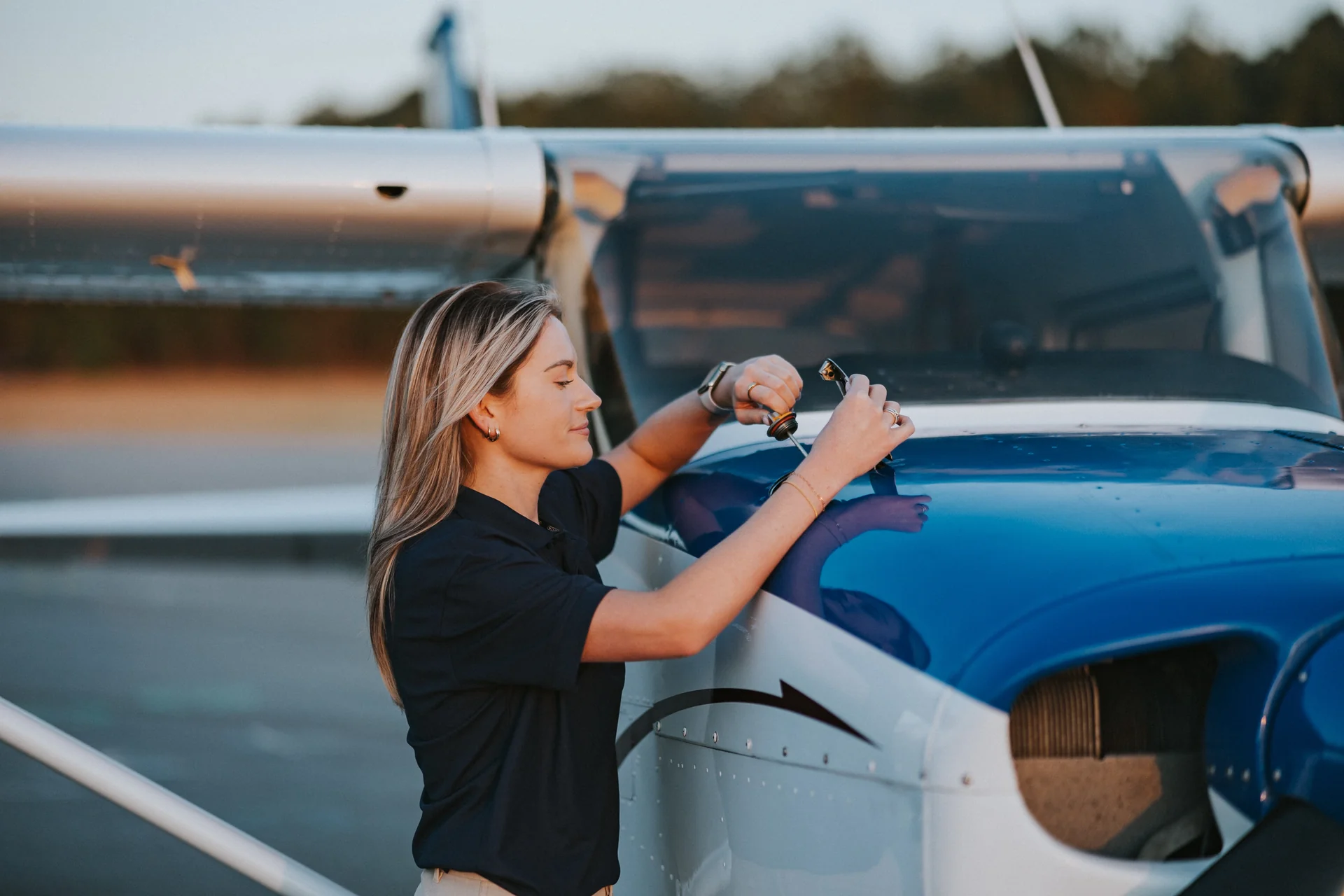
An after-work lesson starts with the same careful preflight as any other.
A Sample Week That Keeps You Flying Three Times
Here is one way a working student can lay out a week. Treat it as a starting template, then adjust it to your job, your commute, and your family.
| Slot | When | What it’s good for |
|---|---|---|
| Early morning | Tuesday, 6:00 AM before work | Calm morning air for maneuvers and pattern work |
| Evening | Thursday, after work | Steady practice and, later in training, night flying |
| Weekend | Saturday morning | Longer lessons such as cross-country flights |
| Backup | Sunday afternoon | A make-up slot when weather or work wins |
The backup slot is the part most people skip, and it’s the part that keeps a part time pilot training plan alive. Lessons get cancelled for weather, a sick day, or an aircraft that needs attention. Open slots depend on instructor and aircraft availability, so the earlier you set a regular pattern with us, the easier it is to keep the same times week after week.
If you want to see how a lesson feels before you commit to a weekly rhythm, a discovery flight is the simplest first step. You’ll get a feel for the cockpit, the airport, and the drive from your office.
How Evening Lessons Count Toward Your Night Training
An evening schedule also lines up with a requirement you’d have to meet anyway. To earn a private pilot certificate under Part 61, you need 3 hours of night flight training in a single-engine airplane. That night training has to include one cross-country flight of over 100 nautical miles total distance and 10 takeoffs and 10 landings to a full stop, each with a trip around the traffic pattern, at an airport. You can read the full list of private pilot experience requirements on the FAA’s page on hourly requirements for becoming a pilot.
If you already fly after work, you’re at the airport when it gets dark, and the habit is already built. A student who only flies on Saturday mornings has to carve out special evenings later to get those hours.
For logging purposes, night begins when evening civil twilight ends, which is a little while after sunset. A lesson that starts at 6:00 PM in June is a daylight lesson. The same 6:00 PM lesson in December can turn into real night time before you’re back in the pattern. Our evening hours run until 11:30 PM, which gives you room to finish those night landings without rushing.
Night training usually comes later in the program, once your landings and radio work are solid in daylight. We’ll plan it with you, so the cross-country and the full-stop landings fit into your normal evening slots instead of turning into a separate project. Our complete private pilot license guide walks through the other milestones that come before and after.
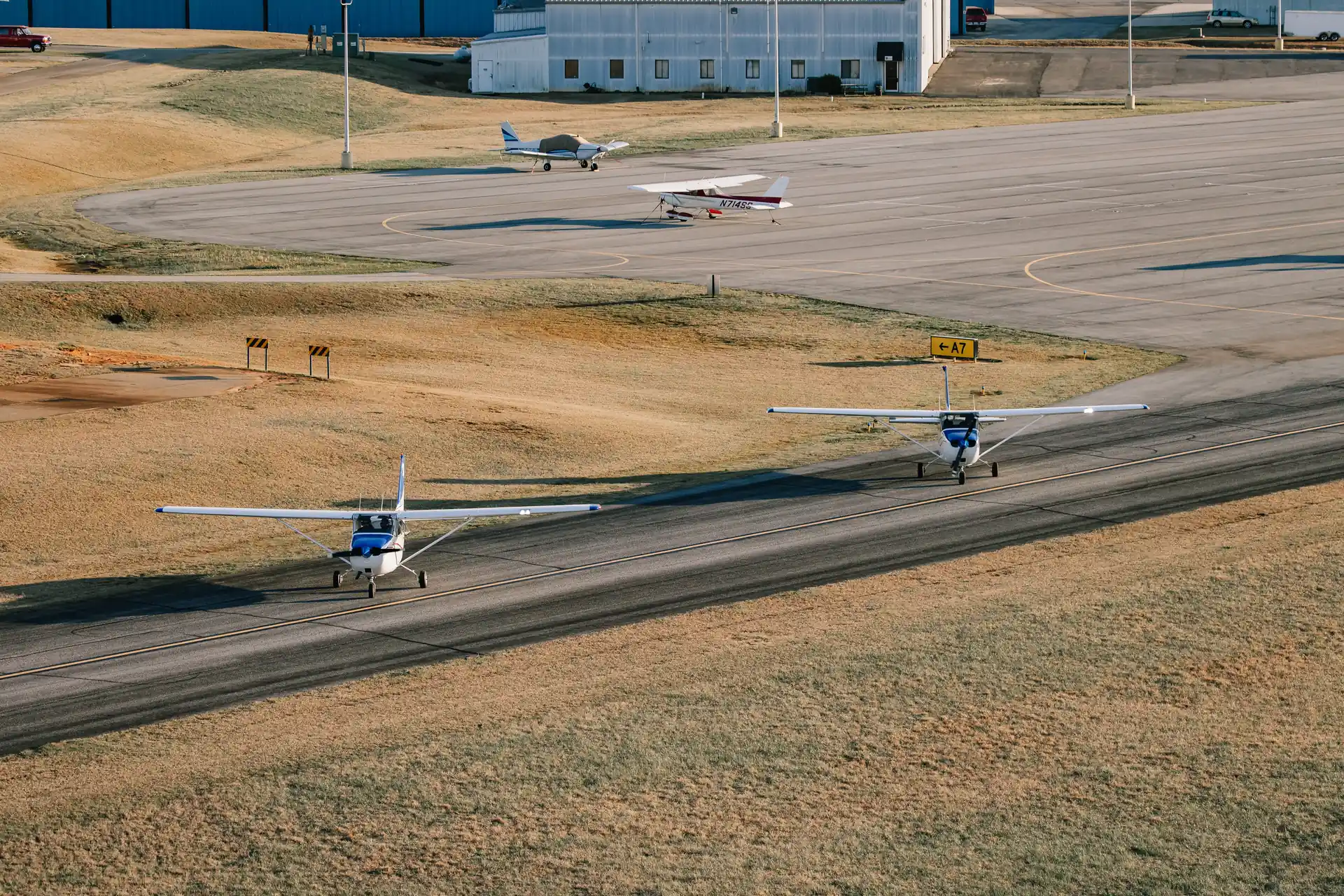
A quiet, non-towered field means more of a short evening lesson goes into flying.
Plan Your Schedule Around the Seasons
Georgia daylight changes a lot across the year, and a smart weekly plan changes with it. In summer, long evenings give you daylight lessons after work, which is perfect for early training. In winter, it gets dark early, so your after-work slot becomes a natural window for night training.
Weekend mornings stay useful all year. They’re the best fit for longer flights like cross-country lessons, when you need a bigger block of time than a weeknight allows. A good pattern is to save the Saturday slot for long lessons and use weekday slots for shorter, focused practice.
Our Cessna 172 fleet is equipped with Garmin 650XI navigators and dual G5 instruments, and we keep the airplanes in good shape so you aren’t spending your one evening slot waiting on a squawk.
Protect the Hours Between Lessons
Your flying time is only half the plan. The other half happens at home: ground study, written test prep, and flight planning. A working student who arrives prepared gets far more out of a one-hour lesson than one who reads the plan in the parking lot.
Pick two or three short study blocks a week, maybe a lunch break and one evening when you aren’t flying. Use them to review the next lesson’s maneuvers and to work through your ground school material. It keeps your evenings in the airplane focused on flying, not catching up.
Two other items belong on your calendar early:
- Your FAA medical exam. You’ll need a medical certificate before you can solo, so schedule it before you get deep into training. Our FAA medical process guide walks you through it.
- A regular check-in with your instructor. Five minutes at the end of each lesson to confirm the next two slots keeps your week from falling apart.
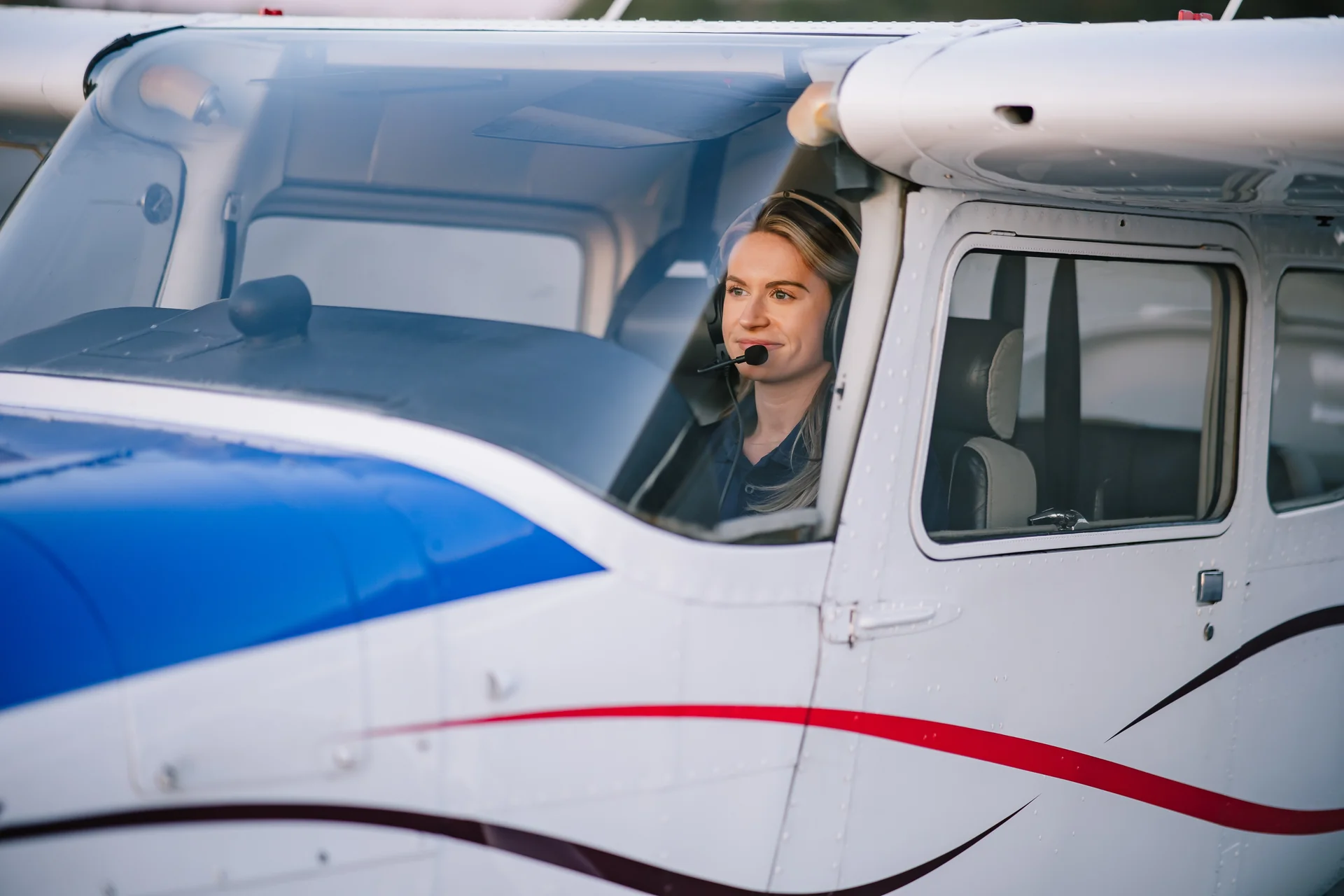
Regular lessons through the week keep radio calls and landings fresh.
What Happens When Work Breaks the Plan
Some weeks, work will win. A project deadline, a business trip, or a sick kid can knock out two lessons in a row. That’s normal, and one rough week won’t undo your progress. What hurts is a month of one lesson a week, because you spend each flight relearning the last one.
When a week falls apart, use your backup slot first. If you lose a full week, plan your next lesson as a review flight and get back to three a week as soon as you can. Our private pilot program offers a self-paced option, so you can slow down for a busy season at work without dropping out. If you’re weighing a much faster pace instead, our accelerated training checklist can help you decide.
Students have made this work with us. Yaz E. earned a private pilot certificate at 51, writing that “even with a busy work schedule and family,” the training happened on their own time. Elijah L. passed his instrument checkride with us while working a full-time job. If age is part of your hesitation, our post on whether you’re too old to become a pilot covers it.
Budget is part of a steady schedule, too. Running out of money midway is a real worry for working students, so plan the full cost before you start. We work with Stratus Financial and Flight Training Finance, and our financing options can help qualified students keep training on a regular rhythm.
Frequently Asked Questions
Can I really learn to fly with a full-time job?
Yes. You can train around a full-time job by using early mornings, evenings, and weekends. Our flight training day runs from 6:00 AM to 11:30 PM daily, and we recommend at least three lessons a week to keep your skills fresh.
How many lessons a week should I plan for?
We recommend at least three times a week. Fewer lessons usually means more time reviewing old material in each flight. If three isn’t realistic right now, our Private Pilot program has a self-paced option.
Do evening lessons count as night flight training?
Only the part flown after evening civil twilight ends counts as night time. In winter, that happens early in the evening, so after-work lessons often overlap with night time. The FAA requires 3 hours of night flight training for a private pilot certificate, including a cross-country flight of over 100 nautical miles and 10 full-stop takeoffs and landings.
What happens if weather cancels my lesson?
Weather cancels lessons for every student at some point. Keep a backup slot in your week, so a cancelled lesson can move instead of disappearing. Contact us to set up a regular schedule that includes one.
How long will it take to finish part-time?
It depends on how often you fly, how much you study, and the weather. The FAA minimum is 40 hours of flight time, and most people need more than the minimum. Flying consistently is the biggest thing you control.
Do I need a medical certificate before my first evening lesson?
No. You can start lessons without one, but you’ll need an FAA medical certificate before you solo. Book your exam early so it doesn’t hold up your schedule.
Start With One Flight and a Plan for Your Week
The best way to test your schedule is to fly once. Book a discovery flight at KHMP, tell us your work hours, and we’ll help you map out the early-morning, evening, and weekend slots that fit your week. Book your discovery flight and start building your private pilot schedule around the job you already have.