Checkride Day: What the Practical Test Looks Like
Published by: Jordan Morris
The alarm goes off, the airplane is already fueled and preflighted in your head, and your stomach knows exactly what day it is. Checkride day is the moment every hour of training points toward, and it feels a lot less mysterious once you know how the day is built. At Speedway Flight Training, our job is to make sure nothing about it surprises you.
A checkride is the FAA practical test for a certificate or rating. It commonly has two parts: an oral exam on the ground and a flight in the airplane, both evaluated against the FAA’s published standards. Below is how the day usually unfolds and how we prepare you for each piece, starting with your Private Pilot training and continuing through every stage after it.
Your instructor decides when you are ready to test
You do not sign up for a checkride and hope. Your instructor recommends you for the practical test when you meet the applicable requirements and are ready. That recommendation is a real gate. It means your instructor has seen you fly the maneuvers to standard, talk through the decisions, and work the checklist without prompting.
Before that point, your training file needs to be in order. You typically need the required aeronautical experience, an FAA knowledge test result where one applies, an instructor endorsement, and a medical certificate when required. Our FAA medical process guide covers the medical piece early, because it is the item students most often leave for last.
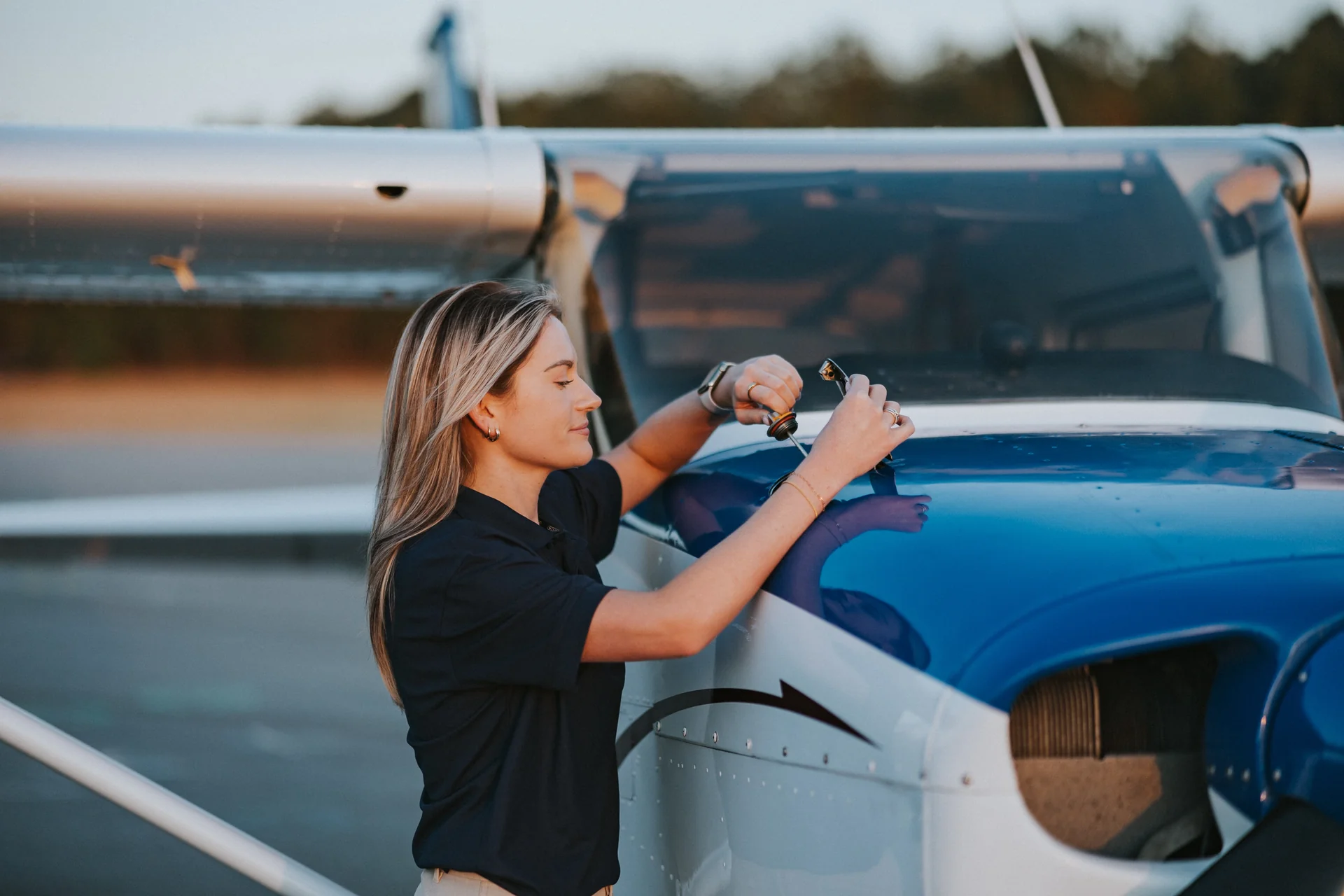
The checkride begins long before takeoff, with the same careful preflight you practice every lesson.
What the standards are grading
Most practical tests are graded against the FAA’s Airman Certification Standards, usually shortened to ACS. The ACS breaks each certificate into tasks and lists what you need to know, how you manage risk, and what you need to be able to do. Knowledge, risk management, and skill all count, so the examiner cares about your reasoning as much as your landings.
That is why we teach from the standards from the first weeks of training. When your instructor debriefs a steep turn or a slow flight, the language matches the ACS, so nothing on checkride day sounds like a new question. Our Instrument Rating program and Commercial Pilot program follow the same approach at higher standards.
The examiner and the paperwork
Many practical tests are conducted by a Designated Pilot Examiner, or DPE, an FAA-appointed designee who can test within the authority of the designation. Examiner availability, scheduling, and fees vary, and they are worth planning for early. Many students budget roughly $1,000 for the examiner’s fee, and your instructor will help you understand what fits your plan.
Bring what the test requires. That commonly includes an airworthy aircraft with the right equipment, the aircraft documents, your application, your knowledge test report when applicable, your pilot certificate, your logbook, and your medical certificate when required. We walk students through the list days ahead, and our financing options can help you plan the testing costs that come at the end of a program.
Inside the oral exam
Many tests begin on the ground. The examiner talks through your plan for the day, then asks scenario questions about weather, airspace, aircraft systems, weight and balance, and your decision-making. Expect follow-up questions. A good oral feels like a conversation with a colleague who wants to see how you think.
Here is what tends to help most:
- Explain your reasoning aloud. Say why you would divert, delay, or cancel, not only what the rule says.
- Use your resources. Looking up a chart, the aircraft handbook, or a regulation is a professional habit.
- Say “I do not know, here is how I would find out” when it is true. Examiners respect honest workflow more than a guess.
Inside the flight
The flight portion follows the tasks in the standards: the preflight and engine start, taxi, takeoff, maneuvers, navigation, emergency procedures, approaches, and landings. Your examiner will describe what to expect and then let you fly. You are the pilot in command, which means you make the calls and manage the workload.
Nerves are normal. Stay steady by flying the airplane first, using your checklists, and correcting mistakes calmly. A slightly off altitude that you notice and fix tells the examiner more about your judgment than a flawless maneuver. Our Fast Track week-by-week guide shows how those habits build during an intensive program.
How we prepare you before the big day
We build checkride readiness into training instead of saving it for the end. Across our programs, that includes mock oral exams, pre-flight and post-flight ground sessions, scenario-based training, and focused checkride preparation. Your instructor runs the oral the way an examiner would, then debriefs the answers with you.
Our stage check process adds a fresh set of eyes. Senior instructors and airline captains who support our program can evaluate you before the real test, so you hear feedback while there is still time to act on it. Learn more about the people behind that process on our crew page.
| Preparation step | What it does for you |
|---|---|
| Mock oral exam | Practice explaining decisions out loud under realistic questioning |
| Scenario-based flights | Rehearse weather, systems, and diversion decisions in flight |
| Post-flight debrief | Turn each lesson into a specific item to sharpen |
| Stage check | Get an outside evaluation before the practical test |
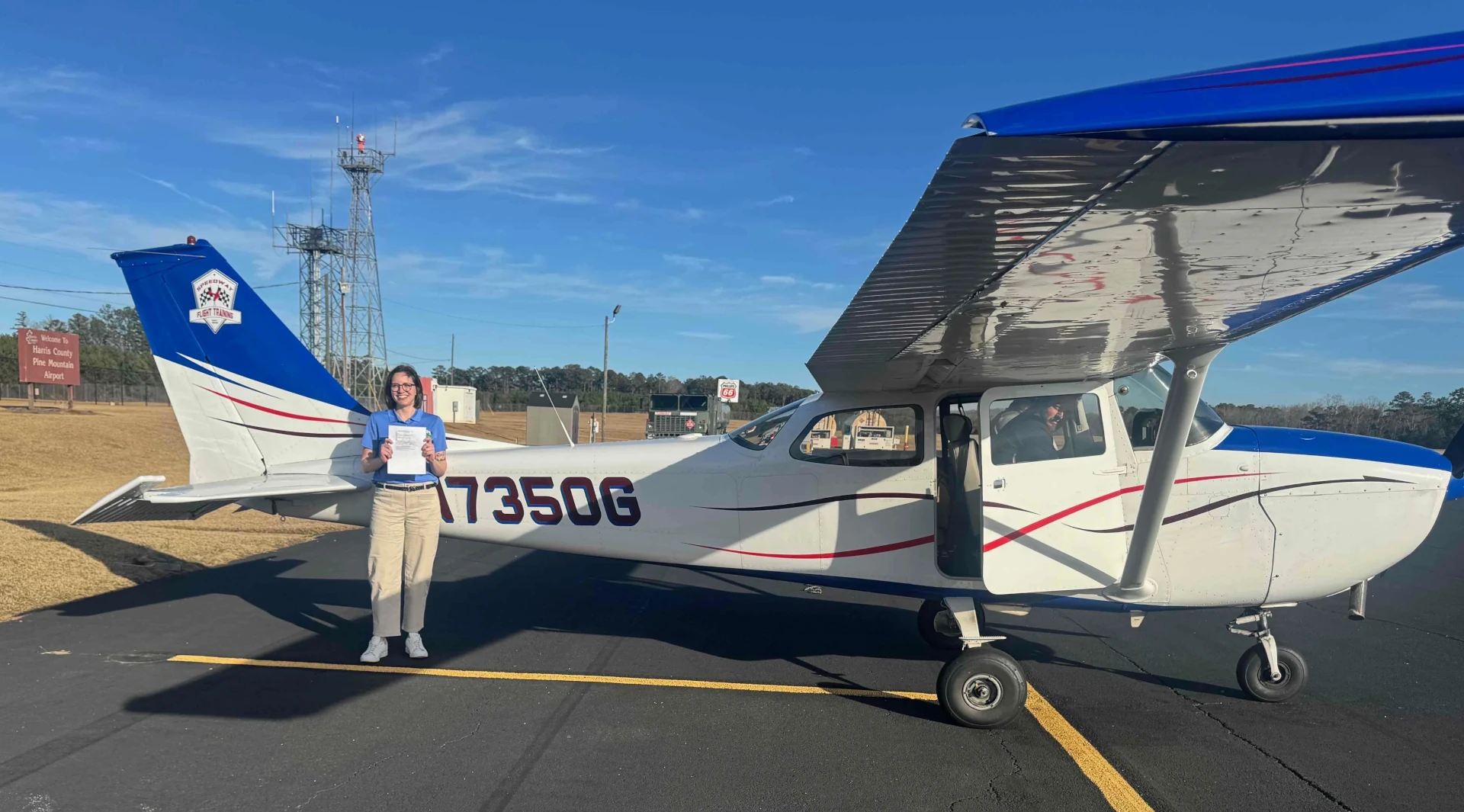
Every lesson ends with a debrief, so you arrive at the checkride knowing what your instructor knows.
What happens after the test
When you complete the flight, the examiner debriefs you on what went well and what needs work. If everything meets the standards, you leave with your temporary certificate or rating. If an area needs more practice, the examiner explains what to work on, and your instructor helps you plan the next attempt. Retesting can add cost, which is one more reason we prepare you thoroughly first.
Whatever the result, you walk away with something useful: a clear picture of your strengths. Many pilots find that the checkride is the moment they start thinking like a pilot in command.
FAQ: Checkride Day Questions
How long does a checkride take?
The length varies by certificate, rating, and the examiner’s plan for the day. Many students set aside most of a day so they are never rushed. Your instructor can help you plan around the certificate you are pursuing.
What happens if I make a mistake during the test?
Mistakes happen in every checkride. The examiner watches how you recognize and correct them. Staying calm and flying the airplane is part of the standard.
Who decides if I am ready?
Your instructor recommends you when you meet the requirements and are ready. That recommendation is based on your performance in training, including mock orals and stage checks.
Do I need my medical certificate for the practical test?
Most checkrides require a medical certificate unless another FAA-recognized qualification applies. Start early with our FAA medical guide.
How much does a checkride cost?
Examiner fees vary and are separate from your instruction. Many students plan around $1,000, plus aircraft time for the test. Our financing page explains how to plan a program budget.
What comes after my first checkride?
Many pilots continue to an instrument rating or toward commercial and instructor certificates. Your instructor can help you choose the next step.
Book a discovery flight and start building toward your own checkride
Every checkride begins with a first lesson, a first preflight, and a first conversation with an instructor who wants you to succeed. Schedule a discovery flight at Atlanta Speedway Airport, see the airplanes you will train in, and meet the team that will prepare you for your own big day.